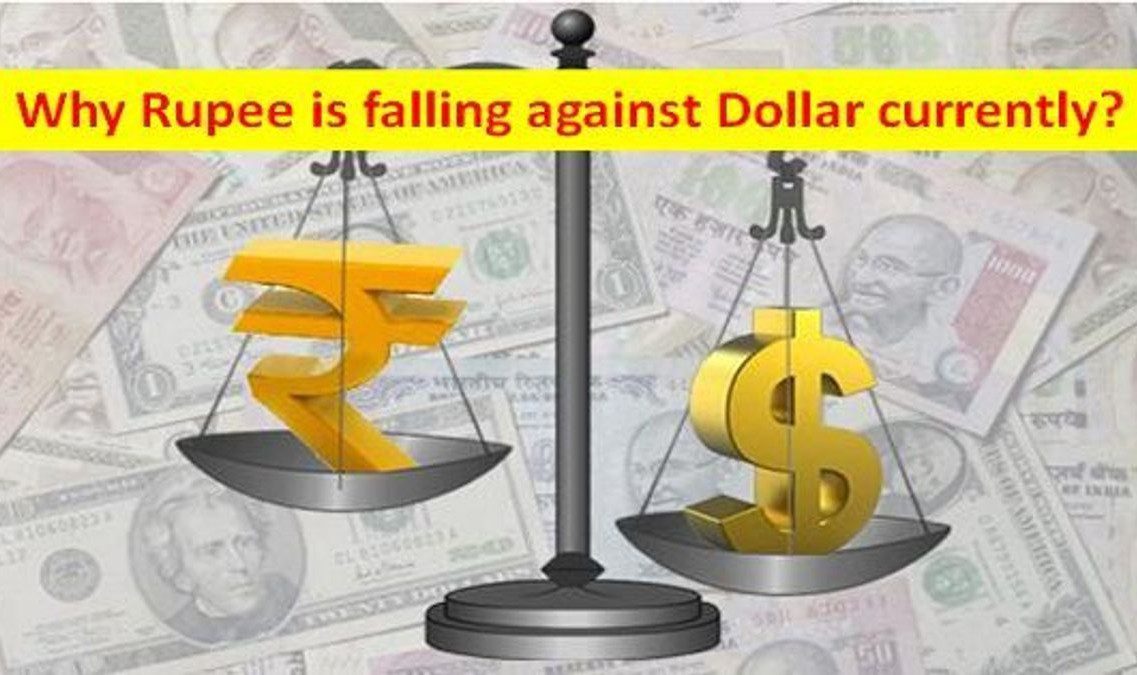
We are facing a very contradictory situation in India today. On one hand, it is repeatedly claimed that the Indian economy has grown rapidly and has now become the fourth-largest economy in the world. We are told that India has moved from being one of the “fragile five” economies and from a lower global ranking to becoming one of the fastest-growing major economies.
However, at the same time, the value of the Indian rupee continues to fall steadily. If India is truly the fourth-largest economy, then why is the rupee weakening so consistently? Back in 2014, the BJP and Prime Minister Narendra Modi had promised that the value of the US dollar would come down to ₹40. Instead of strengthening the rupee, the dollar has now reached around ₹84. This is being presented as an achievement, even while the country claims to be among the strongest economies in the world.
Alongside this, unemployment is said to be at its highest level since India’s independence. When we examine different economic indicators, the picture does not appear encouraging. Whether it is the fiscal deficit and its percentage, total government debt, the debt-to-GDP ratio, external debt, or the massive amount of bank loans written off as NPAs, the situation raises serious concerns. The value and percentage of non-performing assets remain alarming, while bankruptcy cases and insolvency issues continue to rise.
In addition, many MSMEs (micro, small, and medium enterprises) have shut down, capital formation has declined, and household savings have fallen. Indirect taxes have increased, and taxes are now being imposed even on basic necessities. Fuel prices continue to rise, adding to the burden on common people. Profitable national assets are being sold off, raising questions about long-term economic stability. When we look at all these factors together, it becomes difficult to find clear signs of a genuinely strong economy. Apart from the fact that a few large business groups like Adani and Ambani have become extremely wealthy, and that the BJP has reportedly become the richest political party in the world, it is hard to see how the overall economic condition of the country has truly improved.
Many people describe the economy during the UPA government as weak. However, during that period, India managed to bring back gold that had earlier been kept abroad as mortgage collateral, and in 2009, the Reserve Bank of India purchased 200 tonnes of gold. Despite being labelled a weak economy, India also acquired 260 Sukhoi Su-30MKI fighter jets. This stands in contrast to the present government, which claims to be running the world’s fourth-largest and a “Viswaguru” economy, yet purchased only 36 Rafale jets, and that too at a very high price. During the so-called weak economic period, India was able to provide gas and fuel at relatively affordable prices, even when global crude oil prices were extremely high, around 120 US dollars per barrel. In comparison, under the current regime, Indians paid some of the highest fuel prices despite global crude oil prices falling to as low as 20 US dollars per barrel.
Additionally, in today’s so-called fourth-largest economy, taxes are imposed even on hospital bed charges, ICU services, and medical insurance. This raises serious questions about the claims of economic strength. Some people have commented that I did not answer the original question about why the rupee is falling, even though I believe I did. To explain clearly: in October 2024 alone, Foreign Institutional Investors (FIIs) withdrew around ₹1.14 lakh crore from the Indian market. This trend continued in November as well. To manage the situation, the government encouraged Domestic Institutional Investors (DIIs) to step in and support the market.
However, when FIIs withdrew their investments, they converted their money into US dollars before exiting. This led to a sharp increase in the demand for dollars. As demand for the US dollar rose, the value of the Indian rupee fell. This is one of the most visible and immediate reasons for the rupee’s depreciation.
That said, this is only the surface-level explanation. The deeper and more fundamental reason lies in the flawed economic policies of the current government. The falling rupee can be compared to a fever. A fever itself is not the disease, but a symptom. The actual cause could be malaria, dengue, typhoid, COVID-19, a liver problem, an injury, encephalitis, or many other conditions.
Similarly, the fall of the rupee may be due to a combination of several complex factors, not just one single reason. In short, the continuous weakening of the Indian rupee is the result of faulty economic policies that have been followed consistently over many years.
Some people say the rupee weakened more during the UPA government than the NDA government. I have not verified this, but even if it is true, it is not the main issue. Modi had promised to increase the value of the rupee, which means appreciation, not depreciation. On that promise, he clearly failed. Also, no serious economist would advise making such a promise because a sharp rise in the rupee’s value is extremely difficult. My comparison is between what Modi promised and what he delivered, not between BJP and Congress.
The value of the rupee alone does not reflect the health of the economy. Other factors like fiscal deficit, debt levels, NPAs, MSME closures, falling savings and investment, higher taxes, rising fuel prices, and selling of national assets must also be considered. Moreover, currency depreciation is not always harmful if it is planned and controlled. For example, China deliberately devalued its currency as a strategy. In India’s case, the government never said the rupee’s fall was planned and instead claimed that the dollar was strengthening.
Many people often talk about the Chinese yuan devaluation, so I want to explain the background behind it.
China devalued the yuan in 2015. However, before that, for nearly 20 years, the yuan had been steadily appreciating against the US dollar and other major currencies. Since 2005 alone, the yuan had gained about 33% against the US dollar. On August 11, 2015, the People’s Bank of China (PBOC) surprised global markets by devaluing the yuan over three consecutive days, reducing its value by more than 3%. This move was a deliberate devaluation, not a market-driven depreciation. China was able to take this step because its currency had already strengthened significantly over the previous two decades. The decision came from a position of economic strength, not weakness.
Secondly, this was a well-planned, long-term strategic decision, not a sudden or poorly thought-out move like demonetisation. The continuously rising value of the yuan had started to hurt China’s trade competitiveness worldwide. There was also another important reason behind the move: China wanted its currency to be included in the International Monetary Fund’s (IMF) Special Drawing Rights (SDR) basket. Countries hold part of their foreign exchange reserves in SDRs, and China wanted the yuan to be officially recognised as a global reserve currency. To achieve this goal and make the yuan more internationally accepted, China carried out the devaluation.
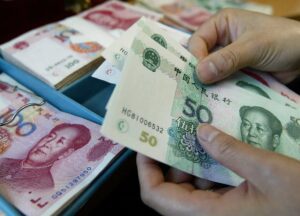
In 2010, China was unable to include the yuan in the IMF’s SDR basket because it was not considered a freely usable currency. In 2015, the IMF welcomed China’s decision to devalue the yuan. As a result, in 2016, the yuan was officially added to the SDR. China also secured a significant share in the SDR basket, with the renminbi receiving a weight of 10.92%, which is higher than the Japanese yen (8.33%) and the British pound (8.09%). Therefore, those who wish to discuss the issue of yuan devaluation should first study the matter in detail before debating it.