What is GPS?
GPS is a satellite-based navigation system developed by the United States. It uses a network of satellites orbiting the Earth to provide location,speed and time information. GPS works in all weather conditions and is available worldwide, free for public use.
How does GPS work
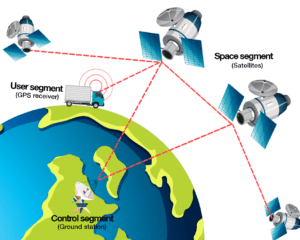
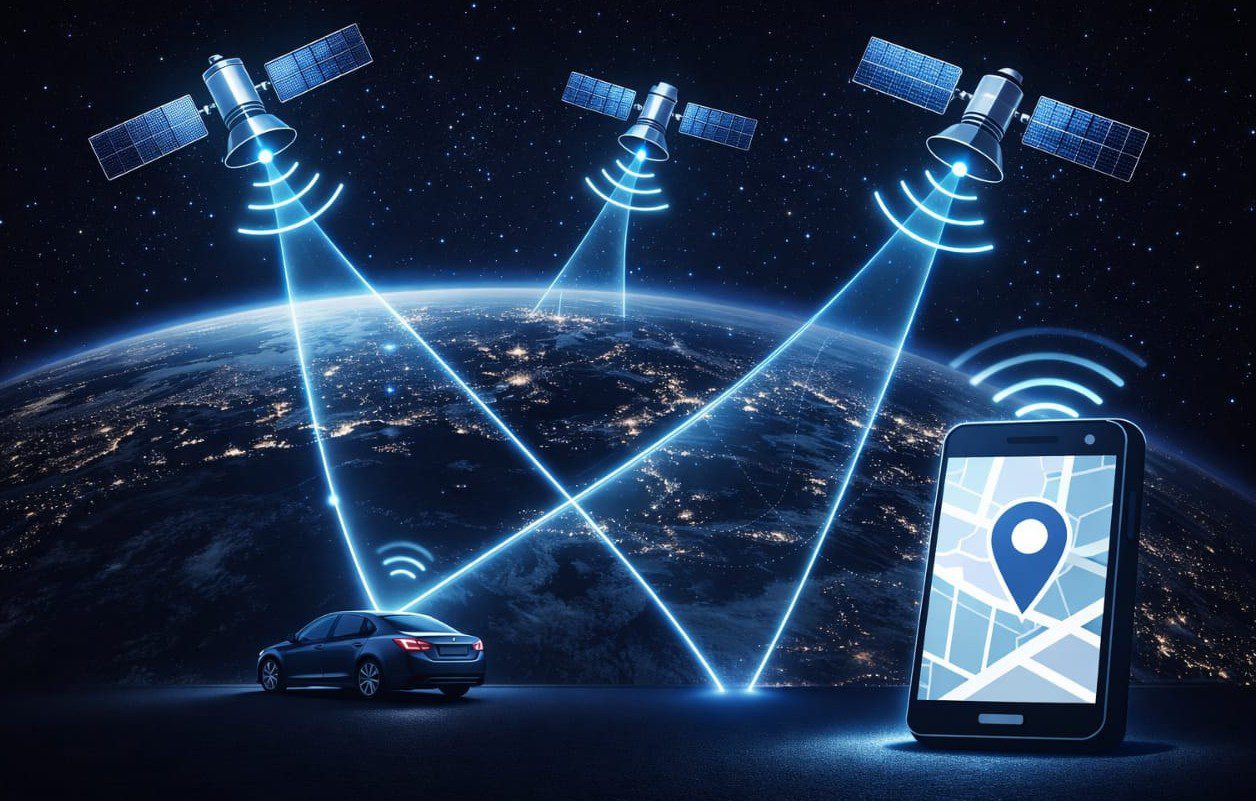
GPS uses a network of satellites the Earth more than 30 active satellites orbiting about 20,200 kilometres above the Earth. These satellites constantly send signals down to the planet. These satellites continuously send signals to GPS receivers. Your device calculates its location by measuring how long the signals take to reach it from multiple satellites. At least Four satellites are needed to find accurate location data.
Why GPS is important
- GPS has changed how people travel, communicate and manage daily tasks.
- It saves time, improves safety and supports many modern technologies.
- Without GPS, many digital services would not work as efficiently as they do today.
Types of GPS
There are different types of GPS based on usage and system design.
1. Standard GPS :
Used in smartphones and navigation devices for basic location and directions.
2. Assisted GPS :
Uses mobile network ans Wi-Fi to improve accuracy and speed, especially in cities.
3. Differential GPS :
Provides higher accuracy and is used in surveying, aviation, and marine navigation.
4. Military GPS :
Used by defence forces with encrypted signals for high precision and security.
Uses of GPS
GPS is used in many areas of daily life and industries :
- Navigation and route guidance
- Tracking vehicles and shipments
- Ride-sharing apps like Uber and Ola
- Fitness and health tracking
- Emergency services and disaster management
- Aviation and marine navigation
- Agriculture and land surveying
Advantages of GPS
GPS offers many benefits for users and organisations :
- Works worldwide
- Provides real-time location
- Improves travel safety
- Saves time and fuel
- Easy to use on mobile devices
- Helps in emergencies
Limitations of GPS
It also has some limitations :
- Weak signals indoors
- Accuracy affected by tall buildings
- Depends on satellite visibility
Conclusion
GPS is an essential technology that helps people navigate, track locations, and stay safe. From smartphones to air planes, GPS plays a major role in modern life. As technology improves, GPS accuracy and applications will continue to grow.
Frequently Asked Questions ( FAQ)
What is the full form of GPS ?
GPS stands for Global Positioning System.
Does GPS need internet ?
No, GPS works using satellite signals. Internet is only needed for maps and live traffic.
Can GPS work without a SIM card ?
Yes, GPS works without a SIM card because it satellite, not mobile networks.
Why does GPS show wrong location sometimes ?
GPS accuracy can drop due to tall buildings, bad weather, weak satellite signals, or outdated map data.
How many satellite does GPS use ?
The GPS system uses 30+ satellites orbiting the Earth to provide global coverage.
How much accurate GPS is ?
GPS is usually accurate within 5 to 10 meters for civilian use.
Can GPS work indoors ?
GPS works poorly indoors because satellite signals are blocked.
Who invented GPS ?
GPS was developed by the United States Department of Defence .