For decades, Israel and Iran fought through proxies like Hezbollah and Hamas. In 2024, the first direct state-to-state attacks took place.
April 1, 2024 (The Catalyst): Israel bombed the Iranian consulate in Damascus, Syria, killing senior IRGC General Mohammad Reza Zahedi.
April 13, 2024 (Iran’s First Direct Strike): Iran launched around 300 drones and missiles. Most were intercepted by Israel and a US-led coalition. Israel responded on April 19 with a precise strike on an S-300 radar near Isfahan.
October 1, 2024 (Operation True Promise 2): After the assassinations of Ismail Haniyeh in Tehran and Hassan Nasrallah in Beirut, Iran fired around 200 ballistic missiles at Israel.
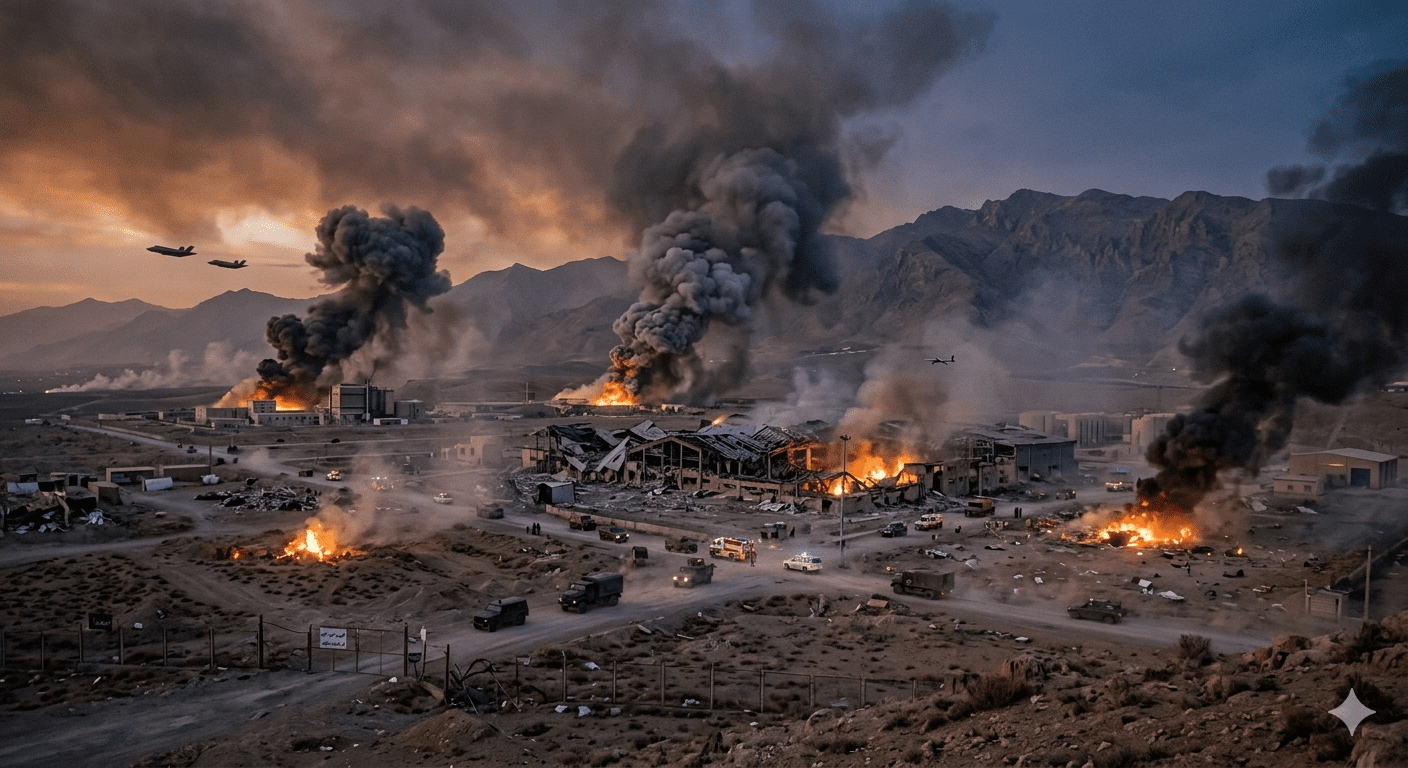
October 26, 2024 (Operation Days of Repentance): Israel retaliated with three waves of airstrikes targeting 20 sites. These strikes crippled Iran’s S-300 air defense systems and damaged key missile-mixing facilities, leaving Iran’s skies open for future attacks.
2. The June 2025 “12 Days of War”
Tensions peaked in mid-2025 when Israel launched a surprise campaign called Operation Rising Lion, aimed at Iran’s nuclear infrastructure.
Targets: Israel reported extensive damage at the Natanz, Isfahan, and Fordow nuclear facilities. They used F-35 stealth fighters and received US logistical support.
Casualties: Over 1,000 people were killed in Iran, including top nuclear scientists.
Outcome: A brief ceasefire was brokered by the Trump administration on June 24, 2025. However, it left Iran’s regional “Axis of Resistance,” which includes Hezbollah and the Assad regime in Syria, heavily weakened.
3. Today’s Major Conflict: February 28, 2026
As of today, we are seeing what analysts call Operation Epic Fury (US) and Operation Lion’s Roar (Israel). This is the most extensive military operation against Iran so far.
The Initial Strikes (Early Morning Today)
Joint Operation: For the first time, the US and Israel are conducting major joint combat operations inside Iran.
High-Value Targets: Strikes have hit the compound of Supreme Leader Ayatollah Ali Khamenei in Tehran. Reports suggest he is currently cut off from communication.
Leadership Losses: Unconfirmed reports indicate that IRGC General Mohammad Pakpour and Iran’s Defense Minister have been killed.
Geographic Reach: Explosions have been reported in Tehran, Isfahan, Qom, Karaj, and Tabriz.
Iran’s Immediate Retaliation
Regional Bases: Iran has launched “suicide drones” and missiles at US military bases in Bahrain, Kuwait, and Qatar. The US Navy’s 5th Fleet HQ in Bahrain was a primary target.
Israel Under Fire: Over 35 ballistic missiles were fired at Israel this morning. Most were intercepted, but sirens remain active across the country.
Gulf Impact: Gulf nations have closed their airspace. This is causing significant global flight disruptions, especially affecting routes from India to Europe.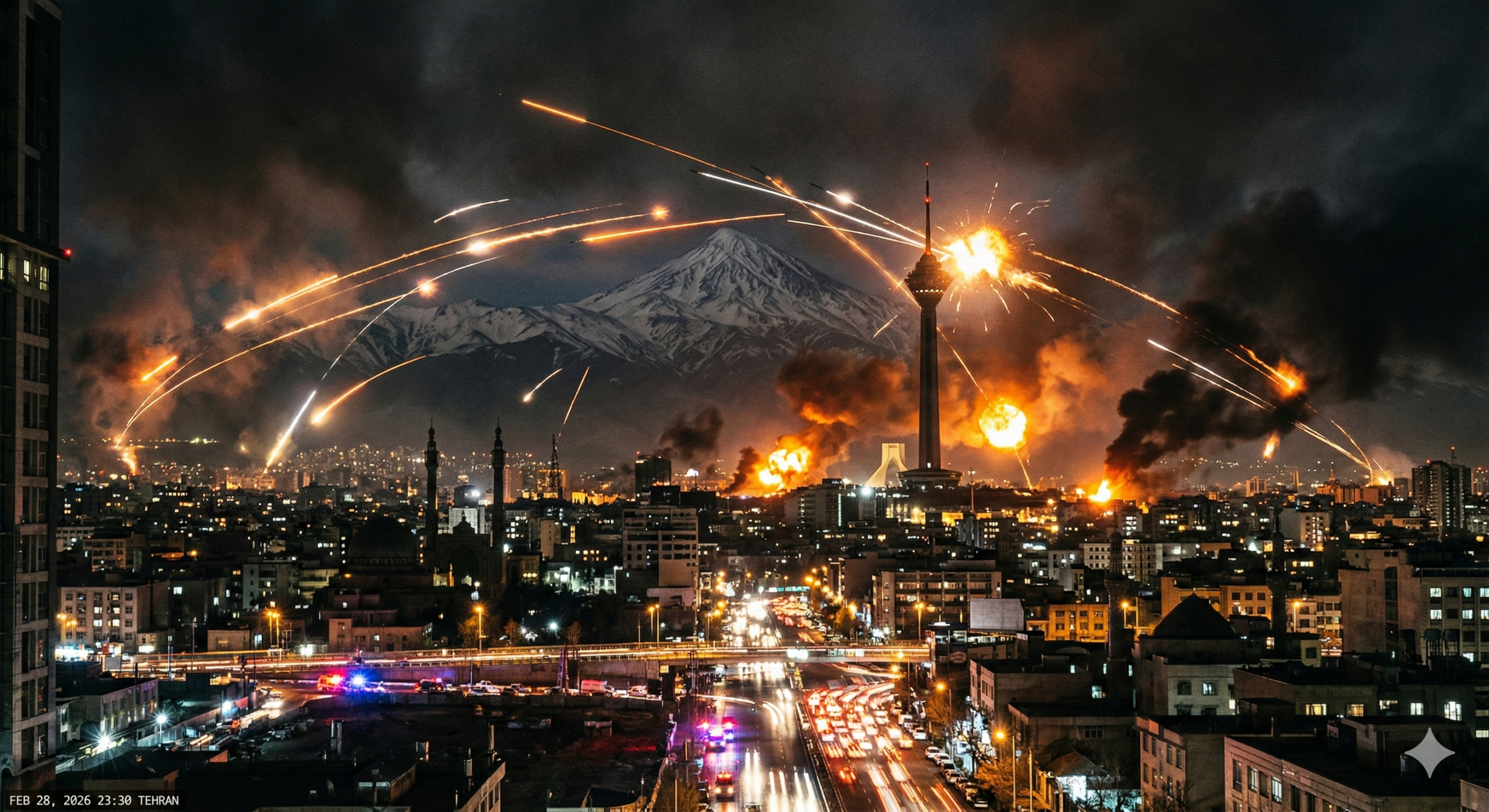
4. Strategic Objectives & Global Impact
The ongoing 2026 operations have three clear goals stated by US and Israeli leaders:
Nuclear Neutralization: Permanent destruction of the capacity to build nuclear weapons.
Regime Incapacitation: Targeting the IRGC’s command and control structure.
Deterrence: Reducing the threat of future long-range missile attacks.
Current Status: The region is in a state of “Total War.” The UN has condemned the escalation, but both Israel and the US have said they will continue the operation “as long as needed” to eliminate the current military threat.
Current Operations: “Epic Fury” & “Lion’s Roar”
The conflict entered a new phase at about 8:15 AM (Israel Time) today. This is no longer a “shadow war.” It is a direct attempt by a US-led coalition to dismantle the Iranian state’s military and nuclear capabilities.
The Combined Strike Force
Scale: Over 200 fighter jets, including F-35 stealth fighters, F-15Is, and F-16Is, conducted the largest single-day air mission in Israeli Air Force history.
U.S. Involvement: President Trump officially announced that the US has started “Major Combat Operations.” This includes the deployment of the USS Gerald R. Ford aircraft carrier and targeted missile strikes from US bases in the Gulf.
The Targets: Hundreds of military targets across 28 Iranian regions have been attacked. Key locations include:
Tehran: The Ministry of Defense, Ministry of Intelligence, and the Presidential building.
Nuclear Sites: Heavy bombardment of facilities in Karaj, Isfahan, and Qom.
Leadership Compound: High-resolution satellite images show significant destruction at the compound of Supreme Leader Ayatollah Ali Khamenei. His current status is unconfirmed, but he is reportedly “cut off from contact.”
Casualties and Losses
Military: Reports suggest that General Mohammad Pakpour (Commander of IRGC Ground Forces) and the Iranian Minister of Defense were likely killed in the initial strikes.
Civilian: Iranian state media (IRNA) reports a tragedy in southern Iran where at least 40 people were killed at a girls’ school during the strikes. In Minab, reports indicate that 85 schoolgirls were killed.
Israel: Domestic sirens have been ongoing. While the “Iron Dome” and “Arrow” systems have intercepted most threats, 89 civilians have been treated for injuries, and at least 3 fatalities are confirmed from direct hits.
2. The 2025 “12-Day Air War” (Operation Rising Lion)
To understand today’s conflict, we must look back at the June 13-24, 2025 conflict. This conflict broke Iran’s air defenses.
The Trigger: Israel claimed Iran was “days away” from a nuclear breakout.
The Damage: Israel destroyed the above-ground parts of the Natanz Fuel Enrichment Plant and damaged the Fordow facility, which is buried 90 meters underground.
The Cost: During those 12 days, Iran fired over 550 ballistic missiles and 1,000 drones at Israel. This resulted in 32 Israeli deaths and more than 41,000 damage claims for destroyed property.
The Outcome: The 2025 war demonstrated that Israel could establish “air superiority” from the western Iranian border all the way to Tehran.
3. Iran’s “Regional Retaliation” Doctrine
Iran is currently activating its “Ring of Fire” strategy, but now with a new twist: they are directly attacking US bases in the Gulf.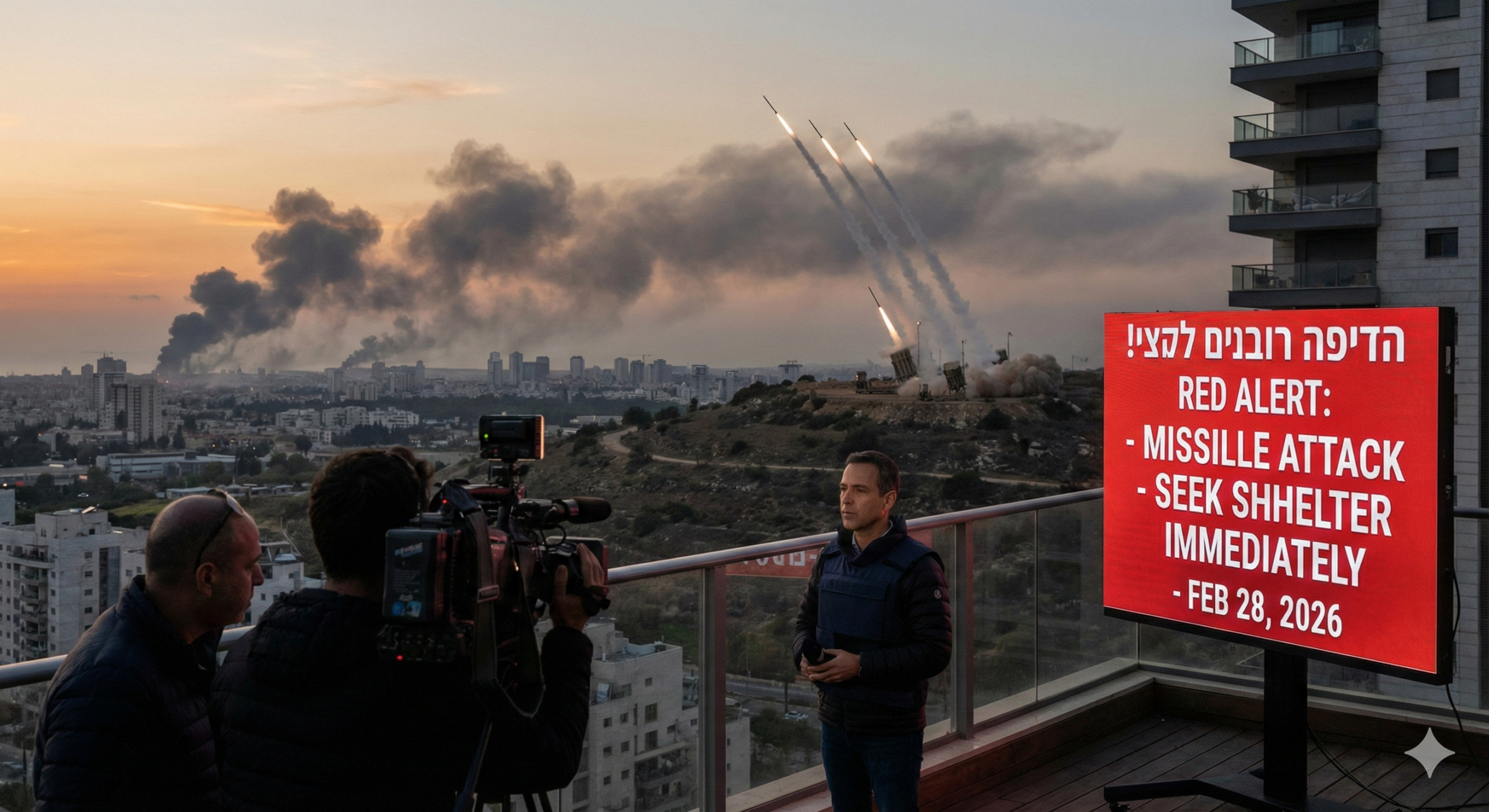
Attacks on Gulf States: Iran has fired missiles at Bahrain, Qatar, Kuwait, and the UAE.
The US 5th Fleet: The service center for the US Navy’s 5th Fleet in Bahrain was hit by a missile today.
Abu Dhabi: Falling debris from an intercepted Iranian missile killed one person in the UAE capital today.
Strait of Hormuz: There are unverified reports that the IRGC has moved to close the Strait of Hormuz, which would effectively halt 20% of the world’s oil supply.
4. Impact on India and the World
The escalation has created an immediate crisis for India, especially given the large diaspora in the Gulf.
Sector: Current Impact
Aviation: Air India and other carriers have cancelled all flights to Europe and North America using Middle Eastern airspace. High-profile athletes, including P.V. Sindhu, are currently stranded in Dubai.
Energy: Brent crude oil prices are spiking as markets fear a total blockade of the Persian Gulf.
Safety: Over 8 million Indian workers in the Gulf are now in a potential combat zone. External Affairs Minister Jaishankar has held emergency talks with both Tehran and Jerusalem, calling for de-escalation.
5. The Political Goal: Regime Change
Unlike in previous years, the rhetoric from Washington and Jerusalem has shifted. President Trump’s message to the Iranian people today was clear: “The hour of your freedom is at hand… The country will be yours to take.” The stated goal is no longer just “containment.” It has shifted to toppling the Islamic Republic regime.
The situation escalated significantly today, February 28, 2026. What began as a “shadow war” has turned into a large direct military campaign. Below are specific details regarding the targets destroyed, the status of Indian citizens, and the global fallout.
Targeted Locations & Military Assets Destroyed
As part of Operation Lion’s Roar (Israel) and Operation Epic Fury (USA), the following Iranian sites have been confirmed as attacked or destroyed today:
Command & Government Centers
The “Leader’s House”: Strikes hit the compound of Supreme Leader Ayatollah Ali Khamenei in Tehran. Satellite images show heavy damage; his current status is unknown.
IRGC Headquarters: Multiple strikes targeted the Islamic Revolutionary Guard Corps HQ and the Quds Force HQ in Tehran.
Ministry Buildings: The Ministry of Defense, Ministry of Intelligence, and the Presidential Office in Tehran were hit and sustained major structural damage.
Nuclear & Missile Infrastructure
Isfahan & Qom: Heavy bombardment of sites linked to nuclear facilities.
Karaj: Airstrikes destroyed buildings at the Shahid Meisami Group (chemical research) and centrifuge production sites.
Western Iran: The IDF confirmed the destruction of hundreds of missile launchers aimed at Israel.
Radar Sites: The Sobashi Radar Site, a central command for air defense, was reportedly destroyed, creating a significant gap in Iran’s early warning capabilities.
Energy & Logistics
Oil Infrastructure: Hits reported at the Shahran Oil Depot (north of Tehran) and refineries in Bushehr and Shahr Rey.
Status of Indian Citizens & Government Advisory
The Indian Ministry of External Affairs (MEA) and local embassies have switched to emergency status. There are over 10,000 Indians in Iran and millions across the Gulf.
Official Advisories (Feb 28, 2026)
In Iran: The Indian Embassy in Tehran has advised all nationals to “stay indoors as much as possible” and avoid unnecessary movement.
In Israel: Indians are advised to remain near designated shelters and follow the Home Front Command instructions closely.
In the Gulf (UAE, Qatar, Kuwait, Bahrain): Missions have issued alerts for citizens to stay vigilant as Iran has started retaliating against US bases in these countries.
The US and Israel launched a major attack on targets across Iran on Saturday, and US President Donald Trump called on the Iranian people to “take over your government” – an extraordinary appeal that suggested the allies could be seeking to end the country’s theocracy after decades of tensions.
The first strikes of the attack appeared to target the compound home to Iran’s 86-year-old Supreme Leader Ayatollah Ali Khamenei in downtown Tehran. It wasn’t immediately clear if he was there at the time. Smoke could be seen rising from the Iranian capital.
Long queues formed at gas stations and many Iranians began heading out of cities in search of safety, witnesses said.
One man, speaking to Reuters from the capital, said he was rushing to get his children from school.
“We are scared, we are terrified. My children are shaking, we have nowhere to go, we will die here,” said Minou, a 32-year-old mother of two from the northern city of Tabriz, one of many areas where explosions were reported.
“What is going to happen to my children?,” she said, crying as she spoke by phone.
Iran said on Saturday it will “respond decisively” after Israel and the United States launched strikes on the country despite talks underway on Tehran’s nuclear programme.