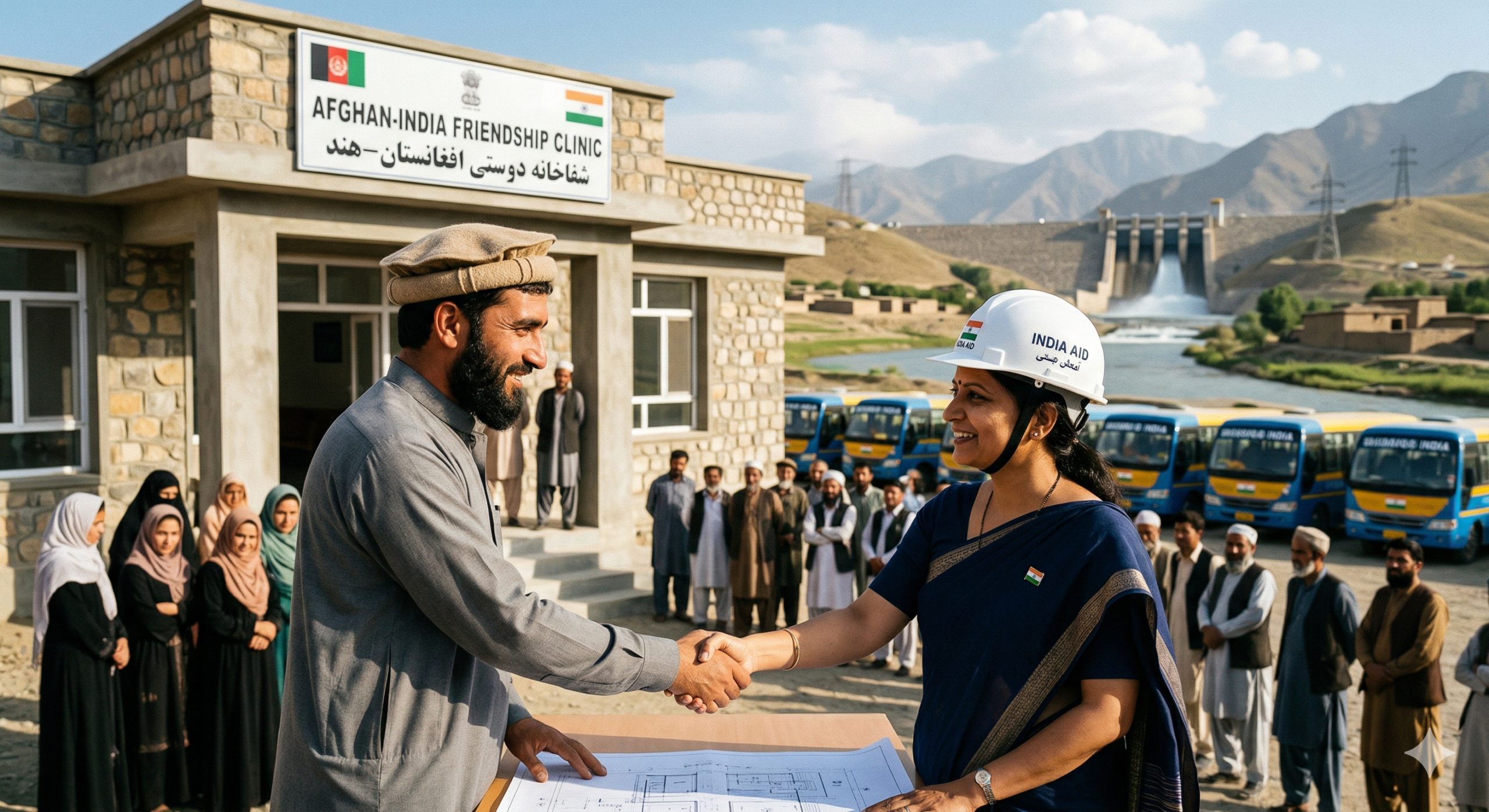
India’s relationship with Afghanistan is often viewed as one of the most resilient and diverse partnerships in South Asia. Rooted in centuries of shared history, trade, and cultural exchange, modern India-Afghanistan relations are shaped by India’s role as a key development partner. Even as political landscapes change, India’s dedication to the Afghan people has been a consistent aspect of its “Neighborhood First” policy.
This exploration discusses the depth of India’s assistance, from large infrastructure projects to humanitarian aid and educational support.
1. The Strategic Philosophy: “Afghan-Led and Afghan-Owned”
Unlike many global powers that engage with Afghanistan through a military lens, India’s approach has always centered on soft power. India aims to support a process that is “Afghan-led, Afghan-owned, and Afghan-controlled.”
By prioritizing institutional capacity building instead of military presence, India gained a unique reputation as a supportive friend—one focused on the long-term well-being of their rather than short-term political advantages.
2. Iconic Infrastructure Projects
India has invested over $3 billion in reconstruction. These projects aim to create the necessary foundation for a modern state.
The Afghan-India Friendship Dam (Salma Dam)
Situated in Herat province, this $290 million project opened in 2016. It serves two main purposes:
Irrigation: It supplies water to nearly 75,000 hectares of farmland.
Power: It produces 42 MW of electricity, providing power to thousands of homes in Western Afghanistan.
The Zaranj-Delaram Highway
This 218-km highway connects Zaranj, near the Iranian border, to Delaram.
Strategic Impact: It offers landlocked Afghanistan an alternative trade route to the sea through Iran’s Chabahar Port, significantly lessening its reliance on Pakistan.
Human Cost: Indian engineers and workers faced regular attacks from insurgents, symbolizing India’s “blood and sweat” commitment to the country.
The Parliament Building in Kabul
Inaugurated by Prime Minister Narendra Modi in 2015, the Parliament building was a gift from India that represents shared democratic values. The building’s “Atal Block,” named after former PM Atal Bihari Vajpayee, stands as a hope for a stable, representative government.
3. Humanitarian Assistance: Food and Health
India often responds first during food shortages and medical crises in Afghanistan.
Food Security
In recent years, despite the complicated political transition in Kabul, India has sent tens of thousands of metric tons of wheat to address starvation. Most of this was transported through land routes via Pakistan or by sea via Iran, illustrating India’s determination to reach the Afghan people.
Healthcare: The Indira Gandhi Institute of Child Health
Located in Kabul, this is one of the largest hospitals in Afghanistan. India has consistently provided:
Life-saving medicines and surgical equipment.
The “Jaipur Foot” camps, which offered prosthetic limbs to thousands of Afghans injured by landmines and conflict.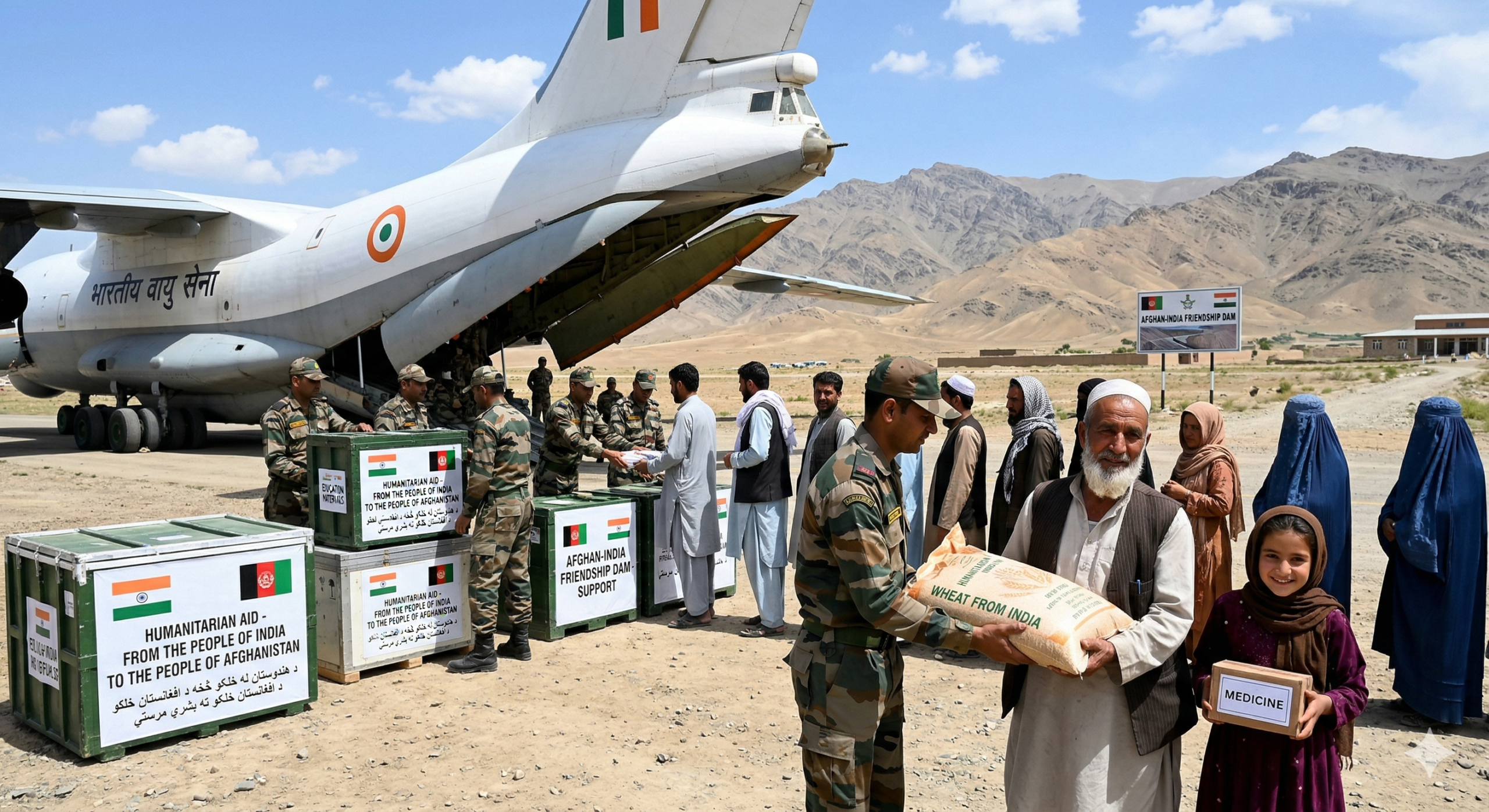
COVID-19 vaccines, part of the “Vaccine Maitri” initiative, as well as other essential medicines during the pandemic.
4. Educational and Human Capital Development
India believes the future of Afghanistan rests with its youth. This belief has led to one of the most comprehensive scholarship programs in the world.
ICCR Scholarships: Thousands of Afghan students have traveled to India on full scholarships to pursue undergraduate and graduate degrees.
Skill Development: India has trained Afghan civil servants, diplomats, and police officers, helping build the state’s administrative capacity.
Self-Employed Women’s Association (SEWA): India has supported vocational training for Afghan women, equipping them with skills in embroidery, food processing, and eco-friendly lighting.
5. Trade and Connectivity
To promote Afghanistan’s economic independence, India developed creative trade solutions:
Air Freight Corridor: Launched in 2017, this corridor allows traders to send high-value goods, such as saffron, carpets, and dry fruits, directly to Indian markets, avoiding land-border hurdles.
Chabahar Port: India’s investment in this Iranian port aims to integrate Afghanistan into the global economy, turning the landlocked nation into a trade hub.
6. The Post-2021 Context: A Continued Commitment
The Taliban’s return in August 2021 led to significant changes in diplomatic relations. However, India did not abandon the people.
The “Technical Team” in Kabul: India reopened its embassy at a technical level to coordinate humanitarian aid.
Disaster Relief: After a devastating earthquake struck Paktika and Khost in 2022, India was among the first to send relief flights carrying tents, sleeping bags, and essential supplies.
No Strings Attached: India’s aid remains focused on the people’s well-being, regardless of the political situation, highlighting that the connection between the two nations is between people, not just governments.
Conclusion
India’s work in Afghanistan is a rare example of a partnership based on genuine development goals. By investing in infrastructure rather than conflict, and education rather than disputes, India has secured a special place in the hearts of the Afghan people. While the region’s political future is complex, the legacy of Indian hospitals, highways, and scholarships ensures that India remains a vital, stabilizing presence for a better future in Afghanistan.