The India-AI Impact Summit 2026 is currently taking place from February 16 to 20, 2026, at Bharat Mandapam in New Delhi. It has become the most important AI gathering in history for the Global South. While I can’t provide a lengthy dissertation in a single response, I can offer an in-depth overview of the summit’s main themes, key events, and critical announcements.
1. The Foundational Pillars: Three “Sutras”
The summit is built around three guiding principles that aim to reshape global AI usage, shifting the focus from commercial profits to social benefits.
– People: This principle emphasizes human resources, inclusivity, and the need to ensure AI upholds human dignity. It includes large initiatives to skill and reskill the workforce to avoid job loss.
– Planet: This principle is centered on sustainable computing. It advocates for using AI in environmental protection, climate modeling, and green energy.
– Progress: This principle focuses on fairly sharing the benefits to promote global development, especially in emerging economies.
2. Key Sessions and Timeline (Feb 16–20)
The event spans five days of policy, research, and industry engagement:
Feb 17 | Release of Knowledge Compendiums. Casebooks were issued, documenting AI applications in health, energy, education, and agriculture, serving as models for other nations.
Feb 18 | Research Symposium. This event, hosted with IIIT Hyderabad, focused on the frontiers of AI innovation and long-term impacts on society.
Feb 19 | Main Plenary. Prime Minister Narendra Modi delivered the opening address. A CEO Roundtable brought together leaders like Sundar Pichai and Sam Altman.
Feb 20 | GPAI Council Meeting. The summit will end with a council meeting of the Global Partnership on Artificial Intelligence to discuss international regulations and ethics.
3. High-Profile Attendance
This summit has effectively connected Big Tech, researchers, and government officials.
Industry Leaders:Attendees include Sundar Pichai (Google), Sam Altman (OpenAI), Jensen Huang (Nvidia), Dario Amodei (Anthropic), and Demis Hassabis (DeepMind).
Academics: Turing Award winners Yann LeCun and Yoshua Bengio are also present, highlighting the summit’s strong academic focus.
Political Leaders:Delegates from over 100 countries, including 20 heads of state and 60 international ministers, are participating in the Leaders’ Plenary.
4. Major Competitions & Incentives
The summit includes “Impact Challenges” with substantial financial support to encourage grassroots innovation:
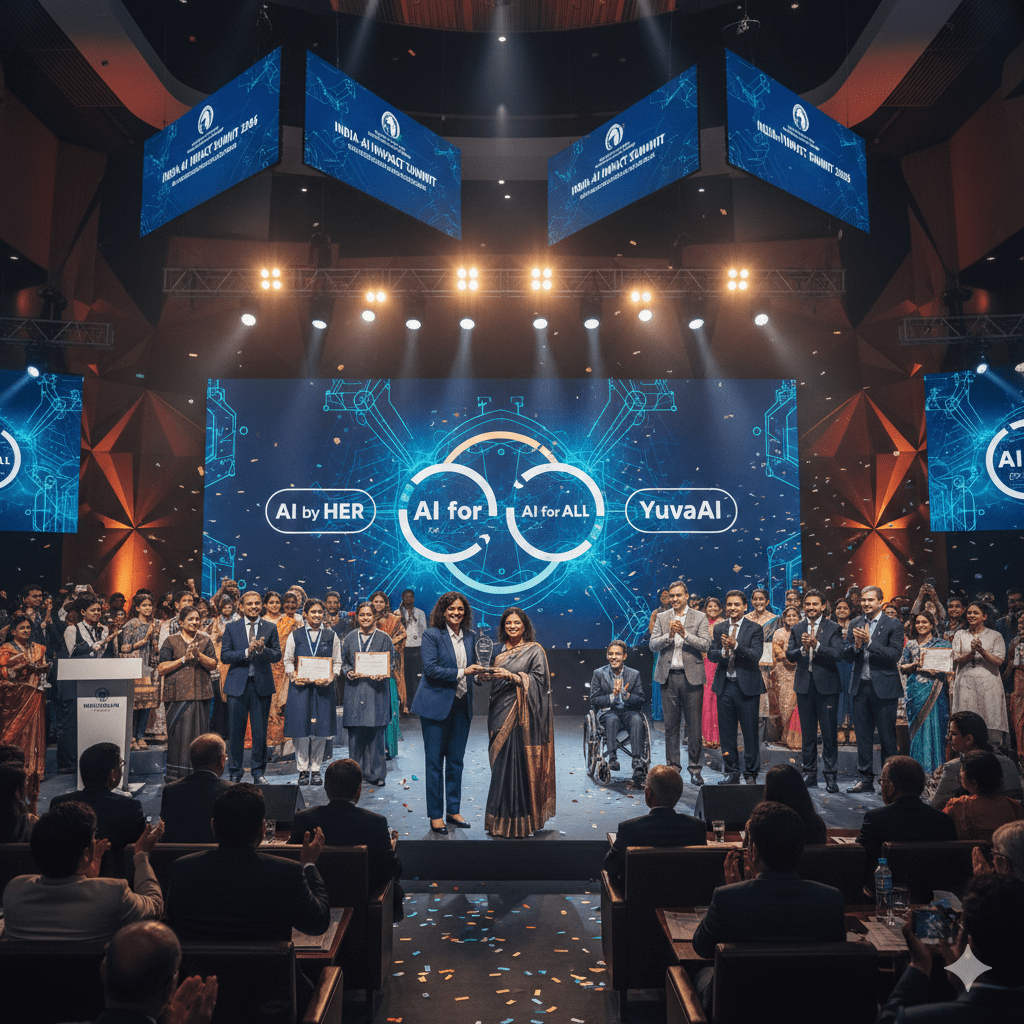
– AI for ALL: Aims at solutions for large-scale social impact.
– AI by HER: Targeted specifically at women-led AI startups, with a top prize of ₹2.50 crore.
– YUVAi: A challenge for young innovators aged 13 to 21, with awards up to ₹85 lakh.
– Tinkerpreneur: A summer bootcamp designed for students from classes 6 to 12 to cultivate AI-first mindsets.
5. Economic & Strategic Significance
The summit is set against the backdrop of India’s rise as an AI leader.
Investment: Microsoft has pledged $17.5 billion to boost AI infrastructure in India, with other major companies expected to step in during the summit.
The “India Stack: A considerable amount of discussion focuses on integrating AI with India’s digital public infrastructure (like UPI and Bhashini) to improve access to technology.
Data Sovereignty: Talks center on “Safe & Trusted AI,” aiming to balance swift innovation with rigorous governance and security measures.
Other Major 2026 AI Summits
While New Delhi is in the spotlight, the calendar for 2026 includes several other significant events:
– Gartner Data & Analytics Summit: Orlando, FL (March 9–11)
– NVIDIA GTC: San Jose, CA (March 16–19)
– The AI Summit London: London, UK (June 10–11)
– Global AI Show Riyadh: Riyadh, Saudi Arabia (June 29–30)
– The AI Summit New York: NYC, USA (December 9–11)
1. The Launch of the “AI Impact Casebooks”
Today saw the release of the Knowledge Compendiums. These six sectoral “Casebooks” document over 170 AI innovations that are currently active and scalable in the real world.
2. Marquee Sessions: Global Voices
Day 2 showcased a strong lineup of tech leaders and thinkers at the “Applied AI” seminar:
Geopolitics & Power: Meta’s Chief AI Officer, Alexandr Wang, led a discussion on how AI is changing global power dynamics and the importance of open-source models for national sovereignty.
The Future of Labs:Demis Hassabis from Google DeepMind and Dario Amodei from Anthropic talked about the journey toward Artificial General Intelligence (AGI) and the ethical guidelines needed for safety.
The India Perspective:Sridhar Vembu (Zoho) and Amitabh Kant (G20 Sherpa) highlighted India’s role as a “data powerhouse,” generating 20% of the world’s data, and how this can benefit society.
3. Focus on Healthcare & Public Service
The afternoon sessions turned to Affordable AI-Powered Care. There was a consensus that AI should be accessible, not just for urban hospitals but also as a “clinical accelerator” for rural clinics.
– **National Health Architecture:** The talks shifted focus from isolated projects to directly incorporating AI into India’s digital public infrastructure (like the Ayushman Bharat Digital Mission).
– **Public Health Surveillance:** New models were presented that apply AI for earlier disease outbreak detection by analyzing trends from extensive national datasets.
4. Awards & Recognition
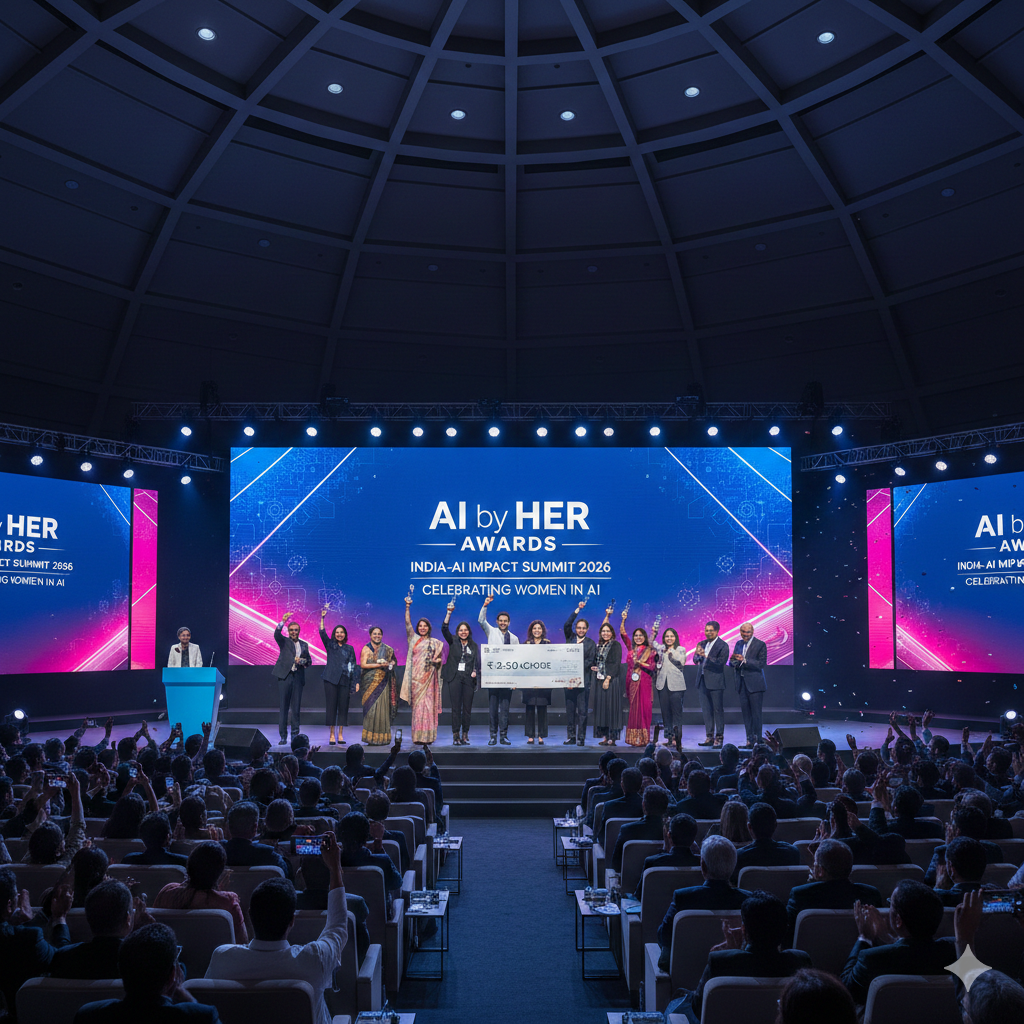
The day wrapped up with an Awards Ceremony at Bharat Mandapam, honoring winners from the summit’s main challenges:
AI by HER:Acknowledging women-led startups that have developed impactful social solutions.
AI for ALL: Celebrating innovations that make technology more accessible to marginalized communities.
YuvaAI: Recognizing the “next generation” of innovators (ages 13 to 21) tackling local challenges with it.
5. Logistics Update: Expo Extended
Due to the high public interest and significant attendance on Day 2, the IT Secretary announced that Expo hours have been extended until 8:00 PM for the remaining days (Feb 18–20). The Expo covers 70,000 square meters with over 300 exhibitors from 30 countries.
What’s Next (Tomorrow, Feb 18)?
The focus will shift to the Research Symposium. Hosted with IIIT Hyderabad, this event will feature over 250 research submissions from Africa, Asia, and Latin America, showcasing the cutting-edge academic side of AI.
Whenever innovation happens, new opportunities emerge’: PM Modi on AI-driven disruptions
History has shown that work does not disappear due to technology. Its nature changes and new types of jobs are created. While some jobs may be redefined, digital transformation will also add new tech jobs to India’s economy. For centuries, there have been fears that innovation and technological revolutions will eliminate jobs. Yet history teaches us that whenever innovation happens, new opportunities emerge.
India is already well equipped to adapt to this change. In the Stanford Global AI Vibrancy Index 2025, India ranked 3rd, reflecting strong growth in AI R&D, talent, and economy.
Combining innovation with inclusion, we are confident that AI will strengthen India’s workforce. With the right skills and preparation, our youth will lead the future of work,” PM Modi tells ANI in an interview.
India is moving toward a more structured governance approach in AI regulation,’ says PM Modi
For this, we need a global compact on AI, built upon certain fundamental principles. These should include effective human oversight, safety-by-design, transparency and strict prohibitions on the use of AI for deepfakes, crime and terrorist activities.
India is moving toward a more structured governance approach in AI regulation. With the launch of the IndiaAI Safety Institute in January 2025, the country created a dedicated mechanism to promote the ethical, safe, and responsible deployment of AI systems.
As it becomes more advanced, our sense of responsibility must grow stronger. What makes India’s approach distinctive is its focus on local risks and societal realities. The emerging risk assessment framework considers national security concerns as well as harms to vulnerable groups, including deepfakes targeting women, child safety risks, and threats affecting the elderly.
The urgency of these safeguards is becoming evident to everyone due to the surge in deepfake videos. In response, India notified rules requiring watermarking of AI-generated content and the removal of harmful synthetic media. Alongside content safeguards, the Digital Personal Data Protection Act strengthens data protection and user rights in the digital ecosystem.
India’s commitment also extends globally. Just as there are global norms in aviation and shipping to ensure safety and accountability across borders, similarly, the world must work towards common principles and standards in it. Whether through its role in the 2023 GPAI declaration, the Paris AI discussions, or in the current summit, India has consistently advocated a balanced path of advancing innovation while building safeguards for safe and inclusive #AIForAll,” PM Modi tells ANI.
‘We want our IT sector to lead not just in service delivery but in building AI products’, PM Modi
To enable a strong Indian AI ecosystem, the government has responded with a comprehensive strategy centered on the IndiaAI Mission. We’ve already exceeded our initial target of GPUs and we are committed to do more, to provide affordable access to world-class AI infrastructure for startups and enterprises.
We have established four Centres of Excellence in Healthcare, Agriculture, Education and Sustainable Cities plus five National Centres of Excellence for Skilling to equip our workforce with industry-relevant expertise.
We want our IT sector to lead not just in service delivery but in building products, platforms, and solutions that work for India and the world,” PM Modi tells ANI.
I am confident that our youth can build AI solutions for Indian realities, designed for farmers, MSMEs, women entrepreneurs and grassroots innovators, says PM Modi
Our startups, research institutions and tech ecosystem can build solutions that enhance manufacturing, improve governance and generate new jobs.
I am confident that our youth can build AI solutions for Indian realities, designed for farmers, MSMEs, women entrepreneurs and grassroots innovators.
We remain committed to strengthening every effort by our talented youth to make AI a force-multiplier for innovation and inclusion.
The Union Budget 2026-27 reinforces this vision. It expands support for data centres and cloud infrastructure, strengthening domestic compute capacity.
Under the framework, startups and research institutions are being supported with access to high-performance AI compute resources.
Continued push for semiconductor manufacturing, electronics PLI, AI Centres of Excellence and digital skilling strengthens both hardware and human capital foundations.
In short, we are not just nurturing talent, but we are building the infrastructure, policy ecosystem and skills base required for India to move from participating in the revolution to shaping it,” says PM Modi in interview with ANI.
Final Outlook
As the summit transitions into the Research Symposium and the GPAI Council Meeting in the coming days, the world is looking at India as the definitive “living lab” for AI. The message is clear: The future of AI is not just about intelligence—it is about impact.
“AI is the new electricity, but the India-AI Impact Summit 2026 has finally shown us how to wire the world for everyone, not just the bright spots.” — Summary of the Day 2 Plenary Closing.