1. Introduction — What Is the Ukraine–Russia War?
The Ukraine–Russia war is more than just news—it’s a conflict that’s been simmering for years, shaped by history, politics, and the complex breakup of the Soviet Union. At its core, it’s two nations struggling over borders, influence, and the direction of Europe’s future.
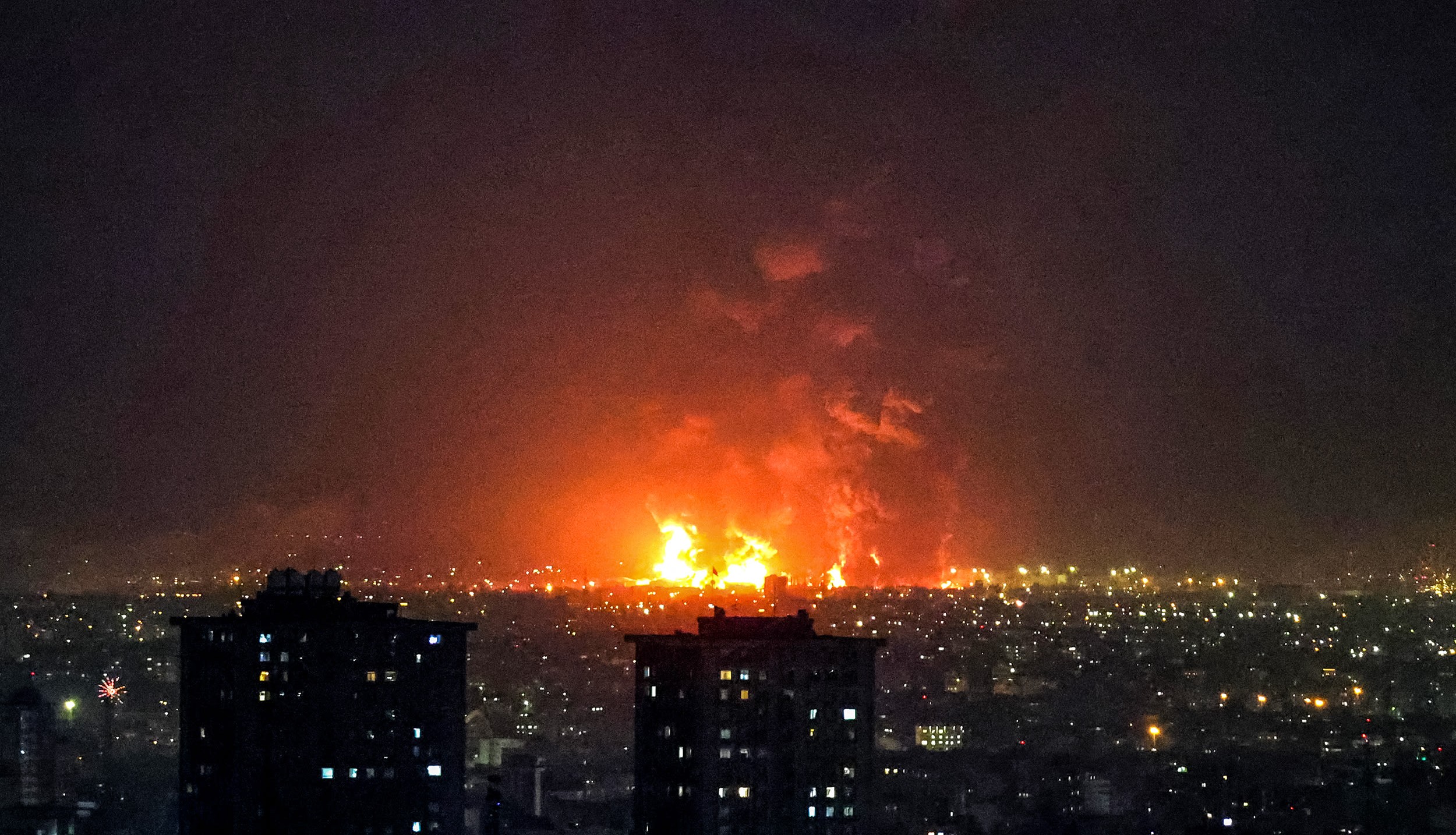
Everything erupted on February 24, 2022, when Russia launched a full-scale invasion of Ukraine. Suddenly, Europe was dealing with its largest war since World War II. The consequences? Hundreds of thousands killed or wounded, millions forced from their homes, and the world scrambling to react with sanctions and shifting alliances.
But make no mistake: this didn’t suddenly begin in 2022. Tensions had been building long before—since 2014, and even earlier, stretching back to Soviet times.
2. Historical Background — Ukraine & Russia Before the War
2.1 Soviet Legacy and Independence (1917-1991)
For most of the last century, Ukraine existed under Russia’s shadow—first as part of the Russian Empire, then the Soviet Union. The divide between them was blurred. Language, culture, and politics all blended together under the weight of Moscow’s control.
That changed in 1991. The Soviet Union collapsed, and Ukraine finally became independent. Overnight, Russia had a new neighbor to its west. This shook up the region and set off a race—should they cooperate, compete, or try both?
After independence, Ukraine didn’t just sever all connections. The two countries remained tied through trade and culture. But at the same time, Ukraine began looking westward—toward the EU, and at the idea of joining NATO. People in western Ukraine mostly supported this new path. In the east and south, many still felt close to Russia and wanted to keep those links.
3. Causes of the Conflict
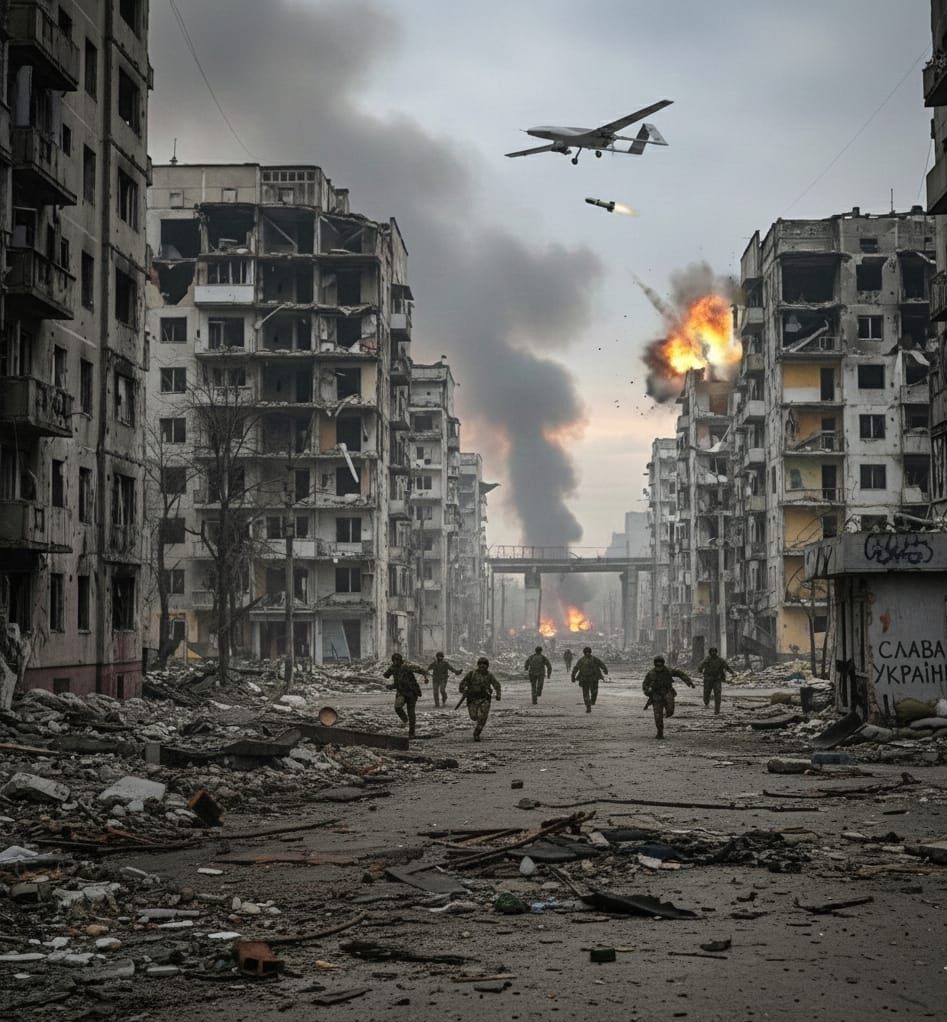
So why did things boil over? There isn’t just one answer. It’s a mix of history, politics, culture, strategy, and economics. Here’s what really pushed the situation past the breaking point:
3.1 NATO Expansion & Security Fears
Russia has been uneasy for years about NATO moving closer.
After the Cold War, NATO started accepting Eastern European countries—right up to Russia’s borders. Military forces and bases inched closer to Moscow.
Then Ukraine signaled interest in joining NATO. For Russia, that crossed a red line—too close for comfort. Moscow viewed it as a direct threat to its security and its influence in the region.
3.2 Internal Divisions & Political Shifts in Ukraine
Ukraine’s own politics kept the situation unstable.
In 2013-2014, mass protests broke out when President Yanukovych abandoned an agreement with the EU and pivoted back toward Russia. The movement, known as Euromaidan, grew into a push for more democracy and a future tied to the West.
Eventually, Yanukovych was forced out. Russia called it a Western-backed coup and saw its control over Ukraine slipping quickly. That’s when relations really deteriorated.
3.3 Crimea Annexation (2014)
After Yanukovych’s fall, Russia acted quickly. In March 2014, Russian forces seized Crimea, a region that had been part of Ukraine since the 1950s.
They organized a referendum, claimed most residents wanted to join Russia, but almost nobody outside Russia accepted it. Ukraine and Western countries called the vote a sham.
This was a major violation of international law. The world responded with harsh sanctions against Russia, setting the stage for more violence in eastern Ukraine.
3.4 War in Donbas and Separatism (2014-2021)
At the same time, conflict ignited in eastern Ukraine. In Donetsk and Luhansk, pro-Russian separatists declared their own “people’s republics” and took up arms.
Russia supported them—with weapons, supplies, and, according to Ukraine and the West, even covert troops.
Leaders met in Minsk and tried to arrange peace—twice. Both ceasefires broke down. The fighting dragged on for years, killing thousands and causing even more people to flee—long before the full-scale invasion in 2022.
3.5 Economic & Energy Disputes
There’s another dimension: economics and energy. Ukraine sits between Russia and Europe, serving as a key route for Russian gas.
Disputes over gas prices, transit fees, and contracts kept mistrust alive. This wasn’t the main spark for war, but it added tension and made the whole situation more complicated.
4. The 2022 Full-Scale Invasion
4.1 Launch of the Invasion
In the early hours of February 24, 2022, Russian forces invaded Ukraine from multiple directions — entering from Belarus in the north, across the eastern borders, and advancing from Crimea in the south.
Moscow’s objective was straightforward yet bold: topple Ukraine’s government, seize major cities (most importantly Kyiv), and install a pro-Russian administration. But events took a different turn. Ukrainians resisted far more fiercely than anyone expected. They halted Russia’s advance near Kyiv that spring, eventually forcing Russian troops to withdraw.
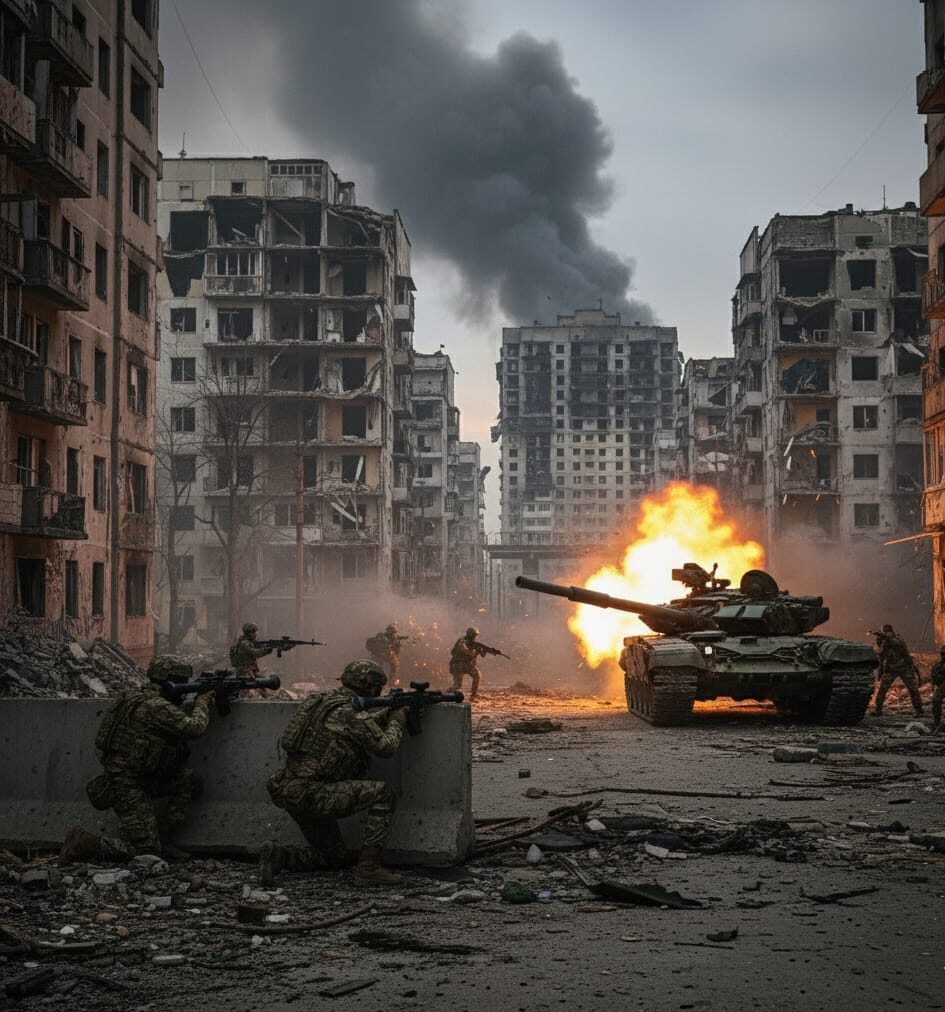
Still, Russia did not relent. They relentlessly attacked cities and infrastructure with artillery, missiles, drone strikes, and bombs. Nowhere in Ukraine felt secure.
 4.2 Impact on Civilians & Siege of Cities
Mariupol became one of the most harrowing episodes. For nearly three months, Russian troops encircled the city, cutting off supplies and bombarding it daily. Tens of thousands lost their lives or fled. Ukrainian fighters held out in the Azovstal steel plant until May.
In towns like Bucha, retreating Russian soldiers left behind shocking scenes. Civilians were found dead in the streets, and reports of war crimes horrified the world.
4.3 Russian Occupied Territories (2014-Present)
By early 2026, Russia holds about one-fifth of Ukraine. This includes Donetsk, Luhansk, Zaporizhzhia, and Kherson — all annexed in 2022 — as well as Crimea, seized in 2014. Millions continue to live under Russian rule.
4.4 Nuclear Safety Concerns
Russian troops seized the Zaporizhzhia Nuclear Power Plant, Europe’s largest. The ongoing standoff made the plant a constant source of fear. Both sides accused each other of endangering the plant — and putting much of Europe at risk of nuclear catastrophe.
5. The War’s Broader Phases (2022–2025)
5.1 Early 2022 — Push to Kyiv and Ukrainian Defense
In the beginning, Russia launched a rapid assault on Kyiv and the north. But Ukrainian defenders proved resilient, and Russian forces ran low on supplies and suffered heavy losses. By April, Russia abandoned its drive for Kyiv and shifted focus to Ukraine’s east and south.
5.2 2023–2024 — Stalemate and Attrition
The war became a grinding battle of attrition. Most combat took place in trenches in eastern and southern Ukraine. Drones grew into a major weapon on both sides — Russia struck at Ukraine’s infrastructure, while Ukraine began hitting targets far inside Russian territory.
5.3 Ukrainian Counteroffensives & Kursk Incursions
In 2024, Ukraine launched counterattacks, even crossing into Russia’s Kursk region in August. This marked the first time the conflict extended so deeply into Russian land. Ukraine made initial gains, but Russia managed to recapture some territory afterward.
6. Impact of the War
6.1 Humanitarian Crisis
Millions of Ukrainians were displaced — fleeing to neighboring countries like Poland, Romania, and Hungary, or moving to safer areas within Ukraine. Families lost their homes. Access to food, water, medicine, and education became scarce. The psychological impact — especially on children — remains severe. Aid organizations struggle to help because fighting constantly shifts.
6.2 Economic & Infrastructure Damage
Ukraine’s cities, electrical grids, schools, hospitals, and ports have suffered massive destruction.
Russia has also felt the consequences — sanctions have isolated it from global markets, foreign investment has dried up, and export revenues continue to decline.
Worldwide, the war’s effects persist. Energy and food prices surged, supply chains were disrupted, and inflation soared.
6.3 Social & Cultural Effects
The war has strengthened Ukrainian national identity. People united, inside and outside Ukraine, to resist the invasion. In Russia, the government tightened control, increased censorship, and pushed nationalist propaganda.
7. International Reactions and Alliances
7.1 Western Support for Ukraine
The US, EU, UK, and NATO did not remain passive. They sent weapons, provided intelligence, trained Ukrainian forces, and delivered billions in aid. Diplomatically, they condemned Russia at the UN and other forums. Some countries formed dedicated support groups, such as NATO’s list of Ukraine’s top needs.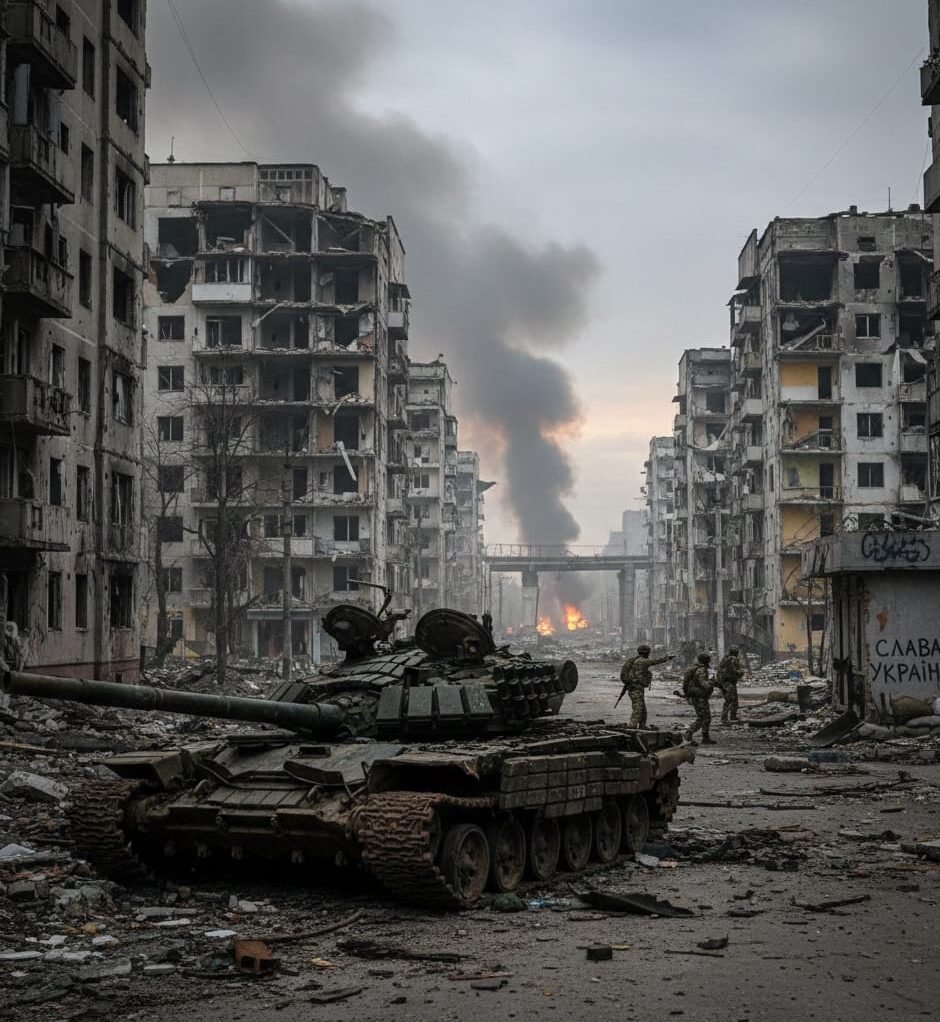
7.2 Sanctions on Russia
Western nations imposed tough economic sanctions on Russia. They froze Russian assets, restricted exports and technology, and targeted energy revenues. Russia’s economy suffered, but the sanctions also raised global prices for fuel and basic goods.
However, not all countries agreed. Some non-Western states cautioned the EU against freezing Russian assets, revealing how divided the world still is over the conflict.
PRESENT SITUATION
Ukraine claimed its first shootdown of Russia’s newly deployed Shahed‑107 kamikaze drone, marking a dramatic debut failure for Iran’s latest unmanned export to Moscow. The interception occurred on December 30, when Ukraine’s 47th “Magura” Brigade’s “Wild Hornets” air defence unit used a low-cost Sting interceptor drone equipped with Hornet Vision thermal imaging to destroy the Shahed‑107 mid‑air. Built by Iranian engineers to combine reconnaissance and attack capabilities, the Shahed‑107 reportedly features an 8–9 kg warhead, real‑time video link, and anti‑jamming navigation—but footage released by Ukraine shows its fiery downfall.
On New Year’s Eve, Russia attacked Ukraine with 205 strike drones. Ukrainian air defense forces shot down most of the Russian drones, according to the Ukrainian Air Force.
From 6 p.m. Kyiv time on December 31 to the morning of January 1, Russians attacked Ukraine with 205 Shahed and Gerbera strike drones and other types of drones from the following directions: Oryol, Bryansk, Kursk, Primorsko-Akhtarsk, Millerovo (Russia), Chauda, Hvardiiske (temporarily occupied Crimea), and Donetsk. About 130 of them were Shaheds.
The Ukrainian Defense Forces’ aviation, anti-aircraft missile forces, electronic warfare units, and unmanned systems, as well as mobile fire groups, repelled the Russian air attack.
Ukraine says it staged death of anti-Kremlin Russian fighter
Ukraine’s military intelligence service, the HUR, said it staged the death of a Russian militia leader as part of a covert operation to thwart an assassination plot.
On Thursday, Kyrylo Budanov, the head of the HUR, appeared in a video alongside Denis Kapustin, the leader of the Russian Volunteer Corps. This unit fights alongside Ukrainian forces against Russia’s invasion.
On December 27, the corps announced that its commander had been killed in a Russian drone strike in Ukraine’s Zaporizhzhia region.
The HUR stated that the initial report of Kapustin’s death was part of a complex operation that allowed Ukrainian intelligence to identify individuals within Russia’s security services who were allegedly plotting to assassinate him.
Russian strikes on Ukraine
Russians launched a massive drone attack on Ukraine on the night of December 31 to January 1, hitting Lutsk, Odesa, and Sumy.
In particular, Russians attacked the Volyn region throughout New Year’s Eve. Due to the Russian strikes on energy facilities, over 103,000 residents were left without electricity.
Also, before the chimes struck midnight on New Year’s Eve, the Russians once again struck Zaporizhzhia, resulting in five casualties, including a teenager.
The region was under a massive attack by Shahed-type UAVs throughout the night. In total, several dozen enemy targets once again attacked critical infrastructure facilities in Volyn,” Rudnytskyi said.
According to him, air defense forces managed to shoot down some of the Russian Shahed drones. At the same time, hits were recorded, resulting in fires. Blazes occurred in particular in Lutsk and the Kovel district, and efforts to extinguish them are ongoing.
Conclusion
The Ukraine–Russia war is one of the most consequential conflicts of the 21st century — rooted in complex historical ties, geopolitical competition, and clashing visions for Europe’s future.
From 2014’s annexation of Crimea to the full-scale invasion in 2022, and through years of intense combat, negotiation, and international engagement, the war continues to produce profound human suffering and geopolitical shifts.
Today (early 2026), even as diplomatic efforts seek to halt the fighting and forge peace, the situation remains volatile. Russian and Ukrainian forces still contest territory; civilians bear the brunt of assaults and displacement; and broader international tensions persist over how the conflict will ultimately be resolved.
Understanding this war requires appreciating its many dimensions — historical, military, humanitarian, legal, and global. It is not merely a regional dispute, but a defining crisis shaping the future of European security and international norms in the coming decades.