West Bengal is experiencing severe cold. Minimum temperatures have dropped below 10 degrees Celsius in many areas. The sub-Himalayan districts will continue to face this chill for another week. Light rain or snow is forecast for Darjeeling. South Bengal citizens can expect some relief soon. Morning fog is also predicted across the state.
Kolkata recorded the season’s lowest minimum temperature on the last day of 2025 at 11 degrees Celsius, 2.8 notches lower than normal, the India Meteorological Department (IMD) said.
Why Kolkata Is Experiencing Too Much Cold
The city of Kolkata serves as the West Bengal state capital while maintaining its reputation as a hot and humid location throughout the year. The summer season extends for a lengthy period with intense heat but the winter season in these regions remains brief and mild compared to the northern parts of India.
The city of Kolkata experiences unexpected cold weather during the winter months of December and January according to recent observations by many people. This raises an important question: Why is Kolkata experiencing too much cold?
The answer is not due to a single reason. Instead, it is the result of multiple geographical, meteorological, and environmental factors working together.
The weather patterns in this region experience changes because of wind direction shifts and western disturbances, and climate change impacts, and decreasing cloud cover, and continental air masses, and human environmental modifications. The following points describes these elements to explain why Kolkata experiences colder temperatures than expected during particular times of the year.
1. Geographical Location of Kolkata
Kolkata is located in eastern India, just slightly below the Tropic of Cancer, and nearby the Bay of Bengal. Its geographical location is such that most of the year, the city experiences tropical wet-and-dry climate. The winters are generally cool, with temperatures at 12°C to 20°C.
Yet, being seated at the northern end of the Gangetic plain, the city may also feel the influence of weather systems moving in from northern India. All of a sudden, the temperature in Kolkata may drop when cold air is allowed to flow in from the north to the south. Though the Himalayas are a great distance from here, the cold northern winds tend to surge southward down to this city.
2. The Role of Cold Northern Winds
One of the prime reasons why the city of Kolkata experiences excessive cold is due to the advent of cold winds from northern India. During winter, these areas like Punjab, Haryana, Rajasthan, Uttar Pradesh, and Bihar experience very low temperatures. Cold air has more weight and density, hence it tries to flow southward.
When the northwestern winds blow strongly, they carry cold air from these regions towards eastern India, including West Bengal. The combined effects of these winds can lower the temperature in Kolkata drastically, especially during early mornings and nights, provided that these winds are quite strong and continuous.
The build-up of adverse effects comes in when:
The Himalayas experience heavy snowfall,
Cold waves develop in northern India,
There is high atmospheric pressure in the north,
Hence, it takes its toll on Kolkata, extending past its normal wintry temperature average.
3. Influence of Western Disturbances
Western disturbances are weather systems generated in the Mediterranean and sweeping eastward across northern India. These disturbances mostly bring winter rain and snow to northern India and the Himalayan region.
After the departure of a western disturbance:
Cold air descends from the snow-covered Himalayan region.
The skies clear up.
Cold winds move toward eastern India.
These post-disturbance conditions often create quite sudden temperature drops for Kolkata. Many cold days of the city are drawn from the days immediately following disturbances over northern India.
4. Clear Skies and Night-Time Cooling
Clear winter skies present another main reason for enhancement of cold in Kolkata. The presence of little cloud cover in winter is good during the day; however, it does create problems at night.
During the night:
The Earth releases heat back into the atmosphere.
The clouds trap some of this heat.
In the absence of clouds, this heat escapes easily.
This phenomenon is called radiational cooling. Because of clear skies, rapid heat loss from Kolkata occurs at night, resulting in higher coldness during early mornings. Hence, winter mornings in Kolkata feel so cold even when, in the later daytime, the temperatures may have risen.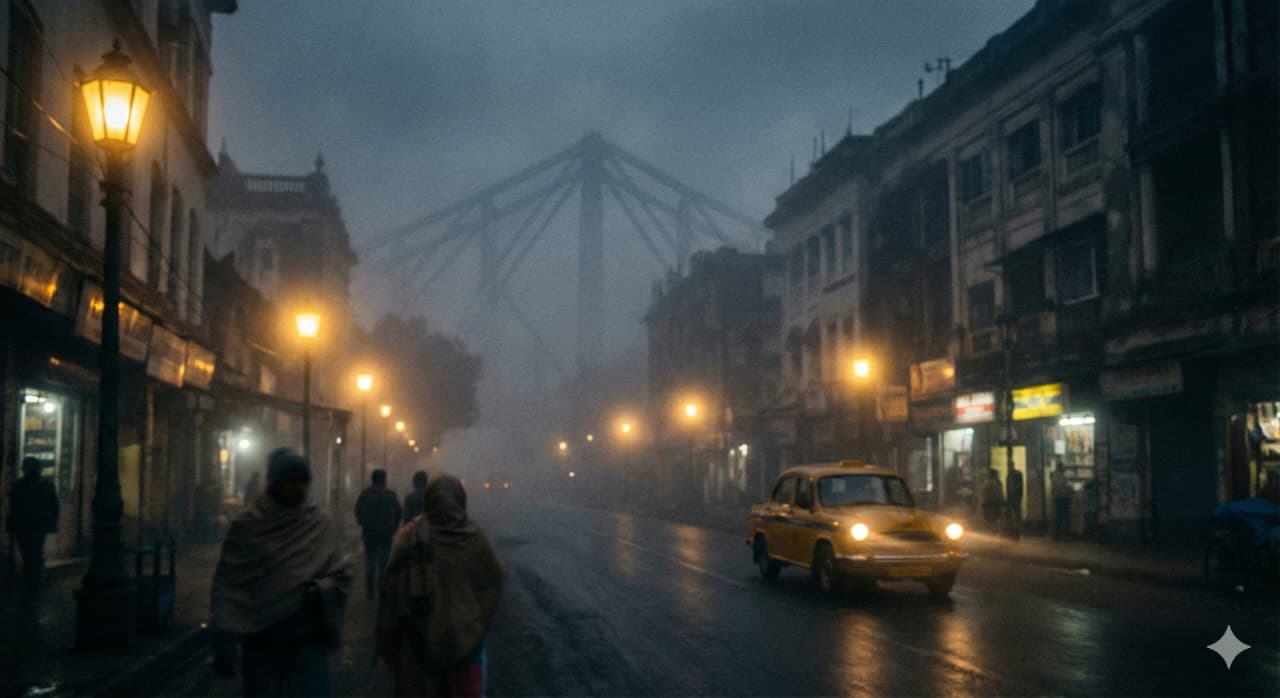
5. Low Humidity and Dry Air
Kolkata is generally humid due to its proximity to the Bay of Bengal. In winter, however, the direction of the wind changes, and dry continental air begins to infiltrate the area.
Dry air:
Is quicker to lose heat than humid air
Enhances the wind chill effect
With a fall in humidity levels, heat loss from the human body occurs relatively faster, making the individuals feel colder than the actual temperature. Hence, this is one of the reasons why the winters in Kolkata at times seem to be harsher than what is rendered by the thermometer.
6. Impact of Wind Chill Effect
The factor of wind chill plays a great part in how cold it feels to Kolkata. Wind chill is thus the perceived reduction of temperature due to wind.
Even when the temperature feels fine:
Strong winds strip body heat
Skin cools quicker
Cold appears more intense
During winter, when cold northwestern winds sweep through Kolkata, the wind chill factor rises – and this makes it feel even much colder, especially in the early mornings and evenings.
7. Climate Change and Weather Variability
Climate change doesn’t mean, hot and hotter, everywhere all the while. Instead, extreme and erratic weather patterns set in.
The situation through climate change:
Jet streams are unstable
Cold air goes farther south some times
Weather patterns linger longer than usual
Consequently, for Kolkata, we may see:
Extended cold spells
Sudden temperature drops
More severe winters
WEATHER REPORT
The official said that the temperature will largely remain the same in the coming days, with the possibility of the minimum temperature dropping further.
On Monday, the minimum temperature in Purulia dropped to 7.2 degrees Celsius, the lowest in South Bengal. The minimum temperature in the hill town of Darjeeling was 4.4 degrees Celsius. Asansol recorded 9.1 degrees, Digha 11.2, Cooch Behar 13.6, Sriniketan 7.3, Kalimpong 10, and Burdwan 9 degrees Celsius.
“The minimum night-time temperatures in Kolkata and other districts of south Bengal will remain largely unchanged for the next two days. This means the current cold spell will continue for now. After that, the minimum temperature may gradually rise by 2-3 degrees Celsius. There is no forecast of a decrease in the intensity of winter before the New Year,” said the MET official.
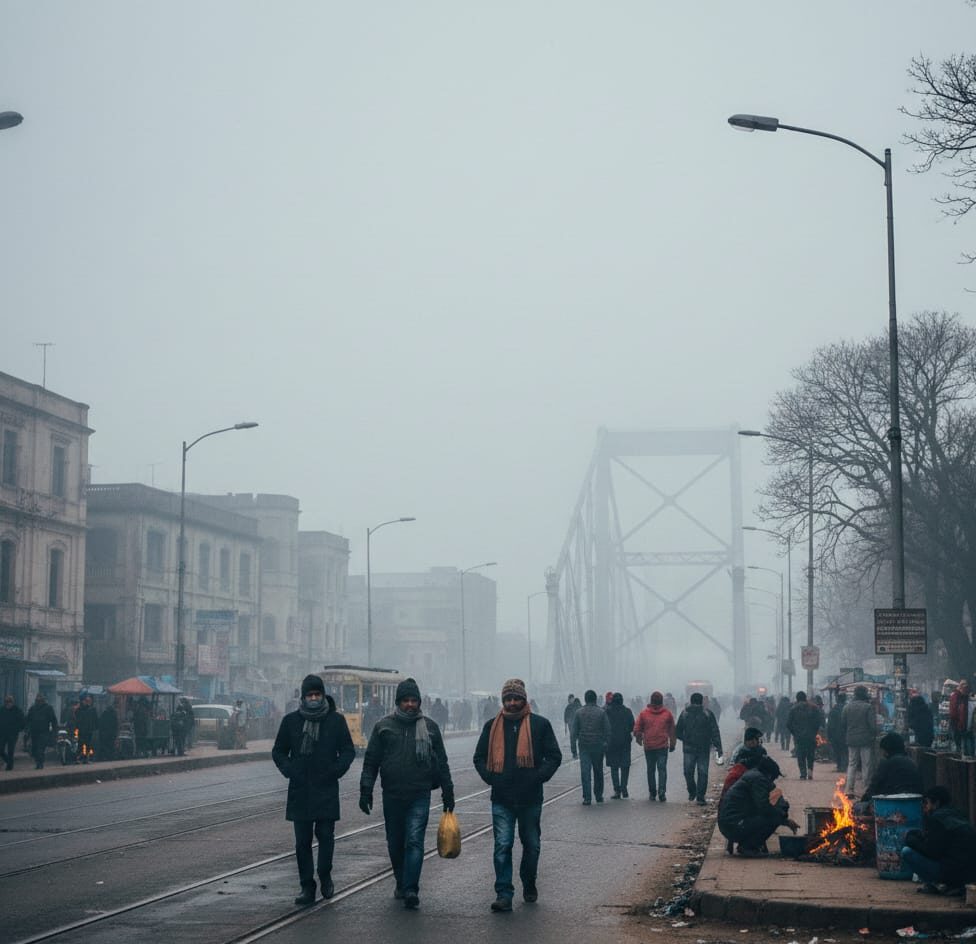
The weather office has issued a warning of dense fog across all northern districts on Saturday and Sunday, with visibility likely to drop sharply to between 199 metres and as low as 50 metres.
Kolkata AQI turns severe amid rising pollution levels
Air quality in Kolkata worsened sharply, with pollution levels rising alongside falling temperatures and dense fog. The poor air quality has raised health concerns, particularly for children, the elderly and people with respiratory conditions.
Dense fog reduces visibility across Bengal
Dense fog blanketed large parts of West Bengal, with visibility dropping to as low as 50–200 metres in several areas during the morning hours. The IMD said fog conditions are likely to persist during night-time and early mornings over the next few days.