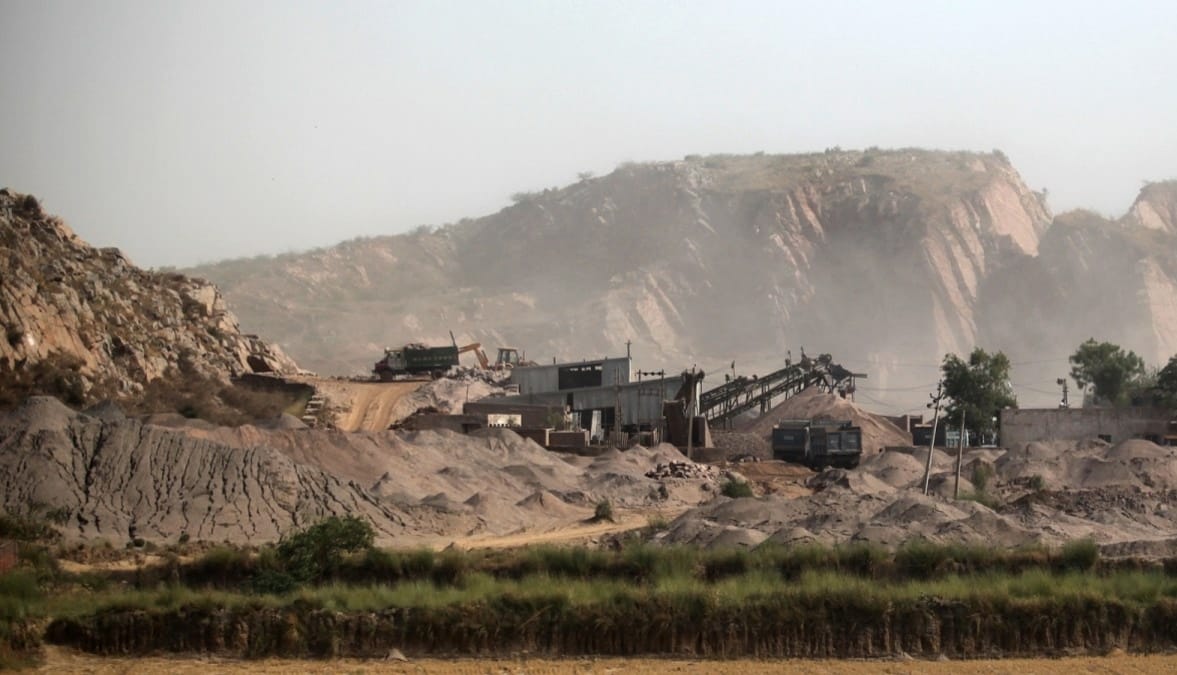
Aravalli Under the Spotlight: Redefinition, Controversy and Conservation Concerns
The Aravalli Hills, one of the oldest mountain systems on Earth and a crucial ecological lifeline for large parts of North-West India, has become the centre of a heated environmental, political, and legal controversy in late 2025. At the heart of this debate is a new legal definition of what constitutes an “Aravalli Hill” — and what areas qualify for strict environmental protection.
The New Definition and the Supreme Court Ruling
In November 2025, the Supreme Court of India accepted a uniform definition, proposed by a committee under the Union Ministry of Environment, Forest and Climate Change (MoEFCC), to define the Aravalli Hills and Ranges for environmental regulation and mining control. According to this definition:
An ‘Aravalli Hill’ is any landform that rises at least 100 metres above its local surrounding terrain, including all connected slopes and adjacent land.
An ‘Aravalli Range’ is defined as a collection of two or more such hills within 500 metres of each other.
This version of the definition was backed by the Supreme Court earlier this month, setting the stage for its implementation.

Government Position: Protection and Clarity
The Union Environment Ministry has defended the definition vigorously. Environment Minister Bhupender Yadav has repeatedly stated that the move is intended to strengthen ecological safeguards by closing loopholes that previously allowed rampant illegal mining in the Aravallis, especially in Rajasthan. He emphasised that:
No new mining leases will be issued in the Aravalli Hills until a comprehensive scientific management plan is completed.
Over 90% of the Aravalli region remains protected under the framework approved by the Supreme Court.
Mining activities are already restricted under existing legal provisions in places like Delhi, Gurgaon, Faridabad, and core wildlife areas, including tiger reserves and sanctuaries.
According to the ministry, the redefinition is not a dilution of environmental safeguards, but rather a much-needed clarification that aligns regulations across four states — Delhi, Haryana, Rajasthan, and Gujarat — where the range extends.
Environmentalists and Experts Sound the Alarm
Critics, including environmentalists, scientists, civil society groups, and local communities, have responded with deep concern and scepticism. Their objections are rooted in both scientific understanding of ecology and practical consequences of the new definition:
The 100-metre Threshold Issue
Many scientists point out that the Aravalli ecosystem includes numerous smaller hills, ridges, and rocky outcrops that fall well below the 100-metre mark. These lower features play essential roles in:
Windbreak functions, blocking sandstorms and dust from the Thar Desert,
Groundwater recharge, critical for drinking and irrigation in surrounding regions,
Habitat support for biodiversity, encompassing migratory and native species.
Under the new definition, these areas may no longer be legally classified as Aravalli and thus could be opened to mining, construction, and other land use changes.

Threat to Lower Elevation Ecological Functions
Experts warn that focusing solely on elevation may ignore ecological connectivity — the way hills, valleys, forests, and water systems interlink. Even lower elevations can profoundly influence regional climate, water cycles, and soil stability.
Protests and Public Mobilisation
Environmentalists have launched movements like the ‘Aravalli Virasat Jan Abhiyaan’ to safeguard the range, calling the new benchmarks senseless and harmful to the mountain system’s future. Protests have also erupted in urban and rural centres, with slogans like “Save Aravalli, Save the Future” visible in places like Gurugram and Udaipur.
Political Fallout and Intensifying Debate
The controversy has quickly acquired a political dimension. Leaders from various parties have traded accusations over both the definition and its implications:
Former Rajasthan Chief Minister Ashok Gehlot has alleged that data cited by the Centre misrepresents the scale of potential mining impacts and could lead to thousands of new mining leases in the state. He framed this as a systematic erosion of ecological safeguards and a broader federal conflict over resource control.
The Aam Aadmi Party (AAP) and other opposition groups have also criticised the government, accusing it of favouring mining interests and environmental degradation on social media platforms.
Ecological Stakes: Why the Aravallis Matter
Beyond politics and legal definitions, the Aravalli range has immense ecological significance:
Biodiversity: The range supports hundreds of native and migratory bird species, butterflies, reptiles, and mammals, including leopards and jackals.
Water: Groundwater recharge zones within the hilly terrain are vital sources of water for agriculture and human consumption across large swathes of Haryana, Rajasthan, and beyond.
Climate and Air Quality: The hills act as a natural wind and dust barrier, moderating weather patterns and helping maintain air quality in Delhi-NCR and adjacent plains.
Activists argue that weakening protections for even part of this system could have far-reaching consequences — from accelerated desertification to stress on groundwater resources and loss of wildlife habitat.
Legal Challenges and the Road Ahead
There are ongoing legal challenges to the 100-metre criterion. The Supreme Court has admitted petitions arguing that this threshold may exclude many ecologically important areas from protection, warning of serious environmental consequences if upheld.
With protests continuing and political voices intensifying, the Aravalli debate is poised to remain a central environmental issue in India well into 2026 — a test case of how the nation balances development pressures with long-term ecological sustainability.