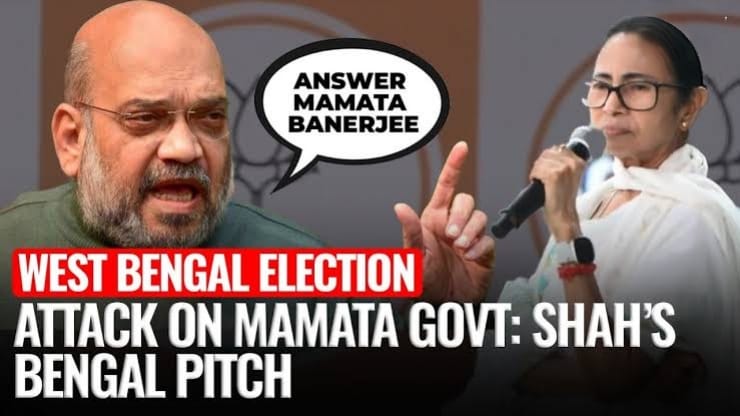
Amit Shah Says Tackling Infiltration Will Be Key in West Bengal Elections
Union Home Minister Amit Shah has made it clear that “tackling infiltration” — particularly along the West Bengal–Bangladesh border — will be central to the political narrative and campaigning ahead of the 2026 West Bengal Assembly elections. His remarks, delivered during a high-profile visit to Kolkata, have ignited fresh debate about border security, demographics, governance, and political accountability in the state.
Shah has positioned illegal infiltration not merely as a law-and-order issue but as a matter of national security, one that he argues has profound implications for Bengal’s future and the country’s cultural identity. He accused the ruling Trinamool Congress (TMC) and Chief Minister Mamata Banerjee of enabling this infiltration for political gain — a charge that has sharply polarized opinion across the state.
Infiltration as a Political and Security Narrative
According to Shah, uncontrolled infiltration has created anxiety among citizens of West Bengal and has led to what he described as a “dangerous” demographic shift. He claimed that infiltration has continued unabated in West Bengal — unlike in other border states where fencing and enforcement have reportedly been more effective — and attributed this to alleged inaction or deliberate obstruction by the state government.

Shah’s intervention focused on several key points:
National Security: He stressed that infiltration is not just a regional concern but a threat to India’s national security, arguing that protecting borders is essential for cultural and territorial integrity.
Border Fencing: Shah criticized the state government for not providing land needed for border fencing, which he said has hampered efforts by the Border Security Force (BSF) to secure the boundary effectively.
Demographic Change: He alleged that infiltration has led to demographic changes that could influence electoral outcomes, suggesting that political parties, particularly the TMC, have benefited electorally by not checking the inflow of illegal migrants.
In his campaign pitch, Shah underscored that if the Bharatiya Janata Party (BJP) forms the government after the 2026 elections, stopping and reversing infiltration would be among its first priorities. He promised the construction of a “national grid” along the border — metaphorically suggesting an impregnable barrier — and vowed to identify and expel illegal migrants.
Political Implications for 2026 Elections
Shah’s remarks are strategic. By foregrounding infiltration, he aims to frame the upcoming elections as a choice between security and alleged misgovernance. He has linked the issue to wider concerns about corruption, safety, and stalled development, portraying the TMC government as unable to protect West Bengal from external threats.
At the same time, Shah has cast the BJP’s potential victory as not only a change of administration but a means to restore Bengal’s heritage, culture and rule of law. He expressed confidence that the party is on track to secure a substantial majority in the 2026 Assembly elections, appealing to voters with a mix of security concerns and promises of socio-economic revival.
Response from Trinamool Congress and Others
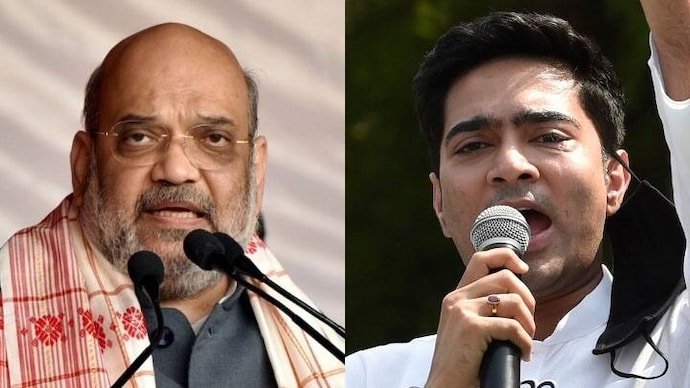
The TMC has responded forcefully to Shah’s statements. Chief Minister Mamata Banerjee dismissed his infiltration claims as “blatant lies,” asserting that security challenges and demographic changes are not unique to West Bengal and that such narratives are being used purely for political mobilization.
Other TMC leaders have echoed this criticism, accusing the BJP of stoking fear to influence voters and divert attention from local issues such as governance and economic development. They have also rejected the suggestion that the TMC is complicit in illegal immigration.
Public and Expert Perspectives
Public reaction to this narrative is mixed. Supporters of the BJP see Shah’s emphasis on infiltration as a legitimate call for law enforcement and national security. For them, securing borders and preventing illegal entry are foundational to protecting jobs, culture, and stability in West Bengal.
Critics, however, argue that the infiltration issue is being exaggerated for electoral gain. Analysts suggest that while border management is important, it should be addressed through cross-border cooperation, enhanced surveillance, and legal frameworks, rather than as a polarized election slogan. They warn that reducing a complex socio-economic issue to a political tool risks deepening communal divides and obscuring broader governance challenges facing the state. (These interpretations are based on the ongoing discourse around the topic.)
Why This Matters
The framing of infiltration as a central electoral issue underscores how security narratives are increasingly intersecting with regional politics. For West Bengal’s diverse electorate — which includes ethnic Bengalis, religious minorities, and migrant communities — the debate over infiltration touches on identity, rights, and the future direction of the state.
As the 2026 Assembly elections approach, the BJP’s focus on infiltration is likely to remain a prominent and contentious theme, shaping campaign strategies, party messaging, and public debate across West Bengal. Whether it resonates with voters or becomes a source of deeper controversy will be a key factor in determining the political landscape in India’s eastern state.