
The U.S. Attack on Venezuela (January 2026): A Turning Point in Latin American Geopolitics
On January 3, 2026, the United States launched a dramatic and unprecedented military assault on the Bolivarian Republic of Venezuela — an act that has shaken global politics, rattled international law debates, and revived fears of renewed regional conflict in the Americas. In a bold, large-scale operation code-named Operation Absolute Resolve, U.S. forces struck targets across northern Venezuela, including the capital, Caracas, ultimately capturing Venezuelan President Nicolás Maduro and his wife, Cilia Flores, and transporting them to the United States for prosecution.
What Happened? The Military Operation Explained
In the early hours of January 3, explosions rocked Caracas and other regions in northern Venezuela, followed by a rapid military advance by U.S. forces. The operation involved:
Aerial bombardments and strikes on Venezuelan infrastructure, military facilities, and strategic targets.
An elite U.S. special operations force that raided Maduro’s residence and apprehended him and his wife.
Deployment of over 150 aircraft from 20 U.S. military bases across multiple service branches, including the Army, Navy, Air Force, and elite special operations units.
The capture and evacuation of Maduro and Flores to New York City, where they have appeared in federal court and pleaded not guilty to narcotrafficking and related charges.
The U.S. government described the raid as a law-enforcement action rooted in existing indictments against Maduro — who had long been accused by Washington of leading a “narco-state” and funneling drugs and criminal enterprise activity into the United States. President Trump claimed the operation was justified under the U.S. Constitution and necessary to counter narcotics and terrorism threats.
Casualties and Immediate Fallout
The assault was not without significant violence:
Estimates from U.S. officials suggest between 75 to 80 people were killed, including Venezuelan and Cuban security personnel and some civilians, amid fierce resistance at key sites in Caracas. U.S. forces sustained comparatively minimal injuries.
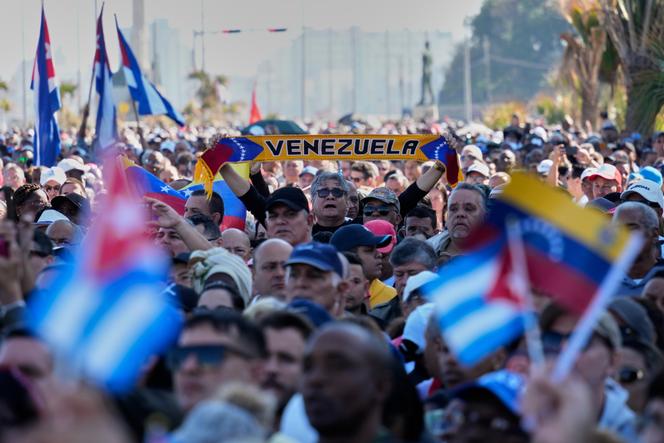
Venezuela’s acting government, led by Delcy Rodríguez, declared a period of national mourning and vowed resistance. Cuba also announced mourning for its nationals killed in the assault.
Within Venezuela, the aftermath has been chaotic. Government loyalists known as colectivos — armed militia groups aligned with Maduro’s government — have been deployed in Caracas to maintain authority, patrol streets, and suppress dissent, creating an atmosphere of fear and repression as the interim regime attempts to consolidate power.
Why the United States Launched the Attack
To understand the sudden escalation, one must look at years of deteriorating relations between Washington and Caracas.
Over the past decade, the U.S. government, particularly under the Trump administration, increasingly portrayed Venezuela as:
A narco-terrorist state, with indictments against Maduro and accusations that the government ran criminal enterprises that supplied cocaine and other illicit drugs to the U.S.
A hostile regime that suppressed democratic norms and violated human rights.
A threat to regional stability, especially given Venezuela’s rich oil reserves and close ties with Russia, China, and Cuba.
Prior to the January 2026 assault, U.S. forces had already engaged in maritime interdictions and strikes against suspected drug-smuggling boats in the Caribbean, seized oil tankers linked to Venezuelan oil transport, and imposed a naval blockade designed to choke off Venezuela’s oil exports — a critical blow to its already struggling economy.
This buildup set the stage for the full-scale raid in early January, which Washington characterized as the culmination of its narcotics and national security strategy: a final effort to remove Maduro and reconfigure Venezuela’s political landscape.
International Reactions and Diplomatic Fallout
The assault drew widespread global condemnation and triggered an emergency session at the United Nations Security Council:
Many nations, including Brazil, China, Russia, Cuba, and Colombia, denounced the U.S. action as a blatant violation of Venezuelan sovereignty and international law, describing it as an act of aggression.
The U.N. Secretary-General and various diplomats expressed alarm at the implications for the international rule of law and regional stability.
Russia explicitly condemned the American operation as an act of armed aggression and called for clarification regarding Maduro’s forced removal.
China, in official statements, said it was “deeply shocked” by the U.S. use of force and criticized it as a violation of international norms.
At the same time, some U.S. allies and anti-Maduro opposition figures supported efforts to hold Maduro accountable, though many stopped short of endorsing the use of force.

Legal and Ethical Debate
Legal scholars and human rights advocates argue the operation raises profound questions:
Critics say the unilateral use of military force against a sovereign nation without clear UN authorization challenges fundamental norms of the United Nations Charter.
The forcible removal of a sitting head of state for prosecution in a foreign legal system is viewed by some as setting a dangerous precedent in international relations.
Questions remain about whether the assault qualifies as a legitimate act of self-defense or an extrajudicial action outside the bounds of recognized international law.
Supporters within the U.S. argue that Maduro’s alleged involvement in international drug trafficking and terrorism justifies extraordinary measures — a position fiercely contested by other governments and legal experts.
What Comes Next?
The situation remains highly fluid:
Venezuela is grappling with internal instability, including militia activity, political repression, and an embattled interim government seeking to assert control.
The U.S. is continuing enforcement actions against oil tankers and vessels it claims violate sanctions, heightening tensions with Russia and other global powers.
Regional governments are divided, with some condemning the U.S. action and others cautiously evaluating their legal and political responses.
For the people of Venezuela, the attack has added another layer of complexity to years of economic crisis, political repression, and social upheaval. For the world, it has reignited debates about sovereignty, intervention, and the limits of unilateral military action in the 21st century.