
Jeddah Tower : Saudi Arabia’s Ambitious Leap Into the Future

Jeddah Tower—earlier known as the Kingdom Tower—is one of the most daring architectural ambitions of the 21st century. Planned to reach a height of approximately 1,000 metres (1 km), the tower is designed to become the tallest building in the world, breaking the record currently held by the Burj Khalifa in Dubai. More than just a skyscraper, Jeddah Tower represents Saudi Arabia’s desire to project innovation, economic diversification, and global leadership through monumental infrastructure.
The project is located in Jeddah Economic City, a vast urban development area north of Jeddah. The tower is envisioned as the centrepiece of the city, which will include residential communities, commercial zones, tourism centres, and modern transport networks. By anchoring this development with an iconic structure, planners hope to attract investors, create jobs, and transform the region into a hub of global business and tourism.
One of the most remarkable aspects of Jeddah Tower is its architectural design. The tower was designed by Adrian Smith, the same architect behind the Burj Khalifa, in collaboration with Gordon Gill Architecture. Its form is inspired by the natural growth of desert plants and the shape of leaves that rise vertically to capture sunlight. This led to a slender, tapering structure that narrows as it rises, reducing wind pressure and improving stability. The aerodynamic shape and the three-winged footprint help the building withstand the harsh climate and strong coastal winds near the Red Sea.
Structurally, the project pushes engineering boundaries. Building a tower of this height requires solving complex challenges related to wind resistance, foundation depth, material strength, elevator systems, and vertical transportation. The foundation alone is extraordinarily deep, driven into the desert bedrock to support the massive load. New-generation high-speed elevators are planned to ensure smooth travel between the lower floors and the uppermost observation decks. Some of these elevator systems would need to travel greater vertical distances than any currently in operation.
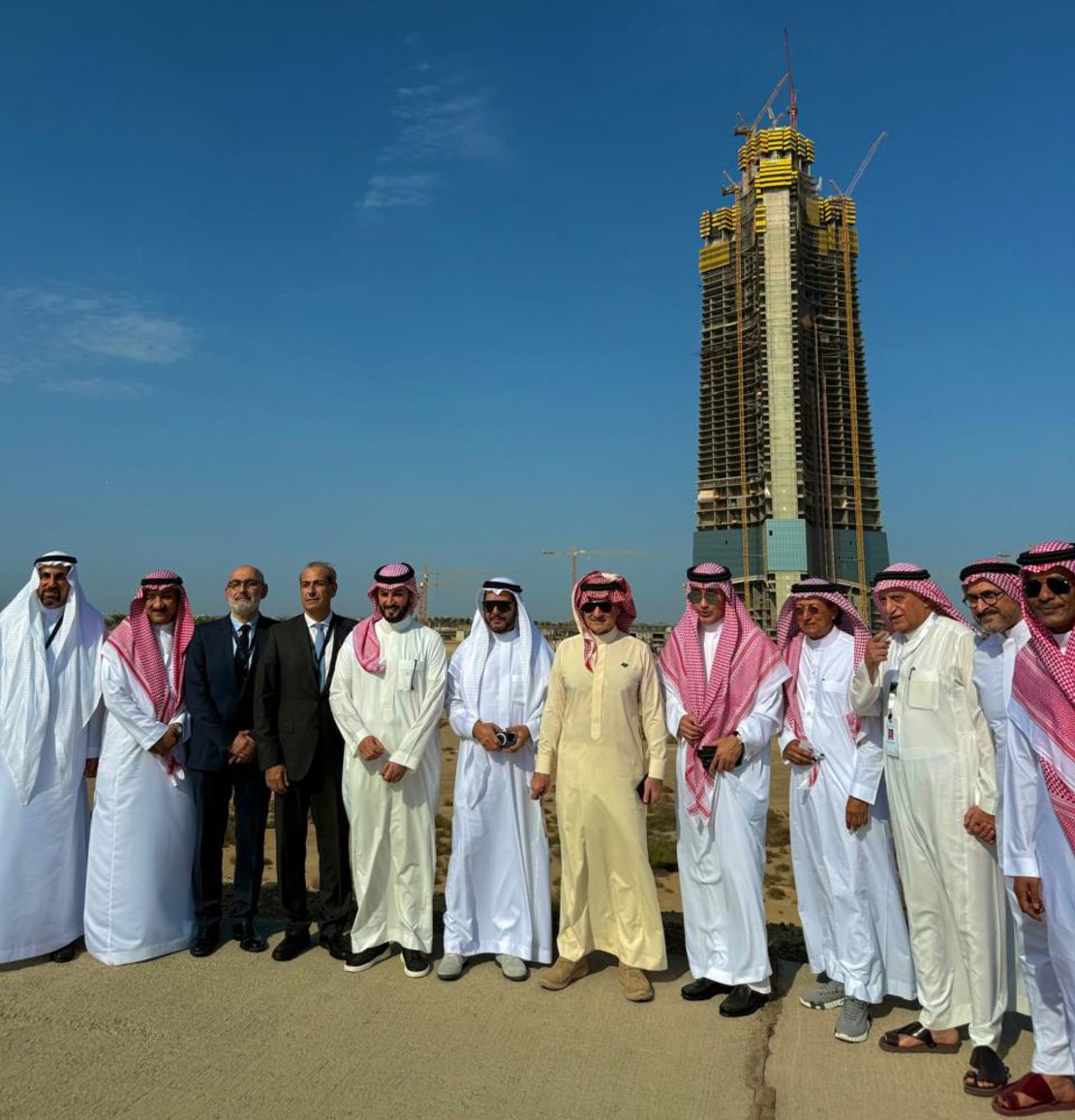
The tower is planned as a mixed-use megastructure, which will host a combination of luxury apartments, offices, hotels, retail spaces, and viewing platforms. One of the most exciting features planned is the world’s highest observation deck, offering panoramic views of the Red Sea, the Jeddah coastline, and the larger Economic City. The tower is not only designed to be tall, but also functional and vibrant, attracting residents, tourists, and business professionals.
The idea behind Jeddah Tower is closely linked to Saudi Arabia’s long-term transformation plans, especially Vision 2030, which aims to diversify the country’s economy beyond oil. Megaprojects like NEOM, The Line, and Jeddah Tower symbolize the nation’s ambitions to build futuristic cities, develop new industries, and present a global image of modernity and progress. A kilometre-tall building plays a symbolic role in showing that Saudi Arabia intends to be a major player in innovation and world-class urban development.
However, the tower’s journey has not been smooth. Work on the structure began in the early 2010s, and construction progressed to a significant height before facing multiple delays. Factors such as contractor disputes, funding complications, management changes, and regional economic challenges contributed to slowdowns. As a result, the tower remains partially completed, but it continues to be widely discussed as one of the boldest architectural visions ever attempted.
Despite the uncertainties, Jeddah Tower continues to capture global attention. Engineers, architects, and skyscraper enthusiasts around the world closely follow updates on the project due to the sheer scale of the challenge it represents. The concept of building a structure one kilometre high pushes the limits of modern
C0nclusion :
The conclusion of the Jeddah Tower project is its projected completion around 2028, after construction was restarted in 2023 following a pause since 2018. It will be the world’s tallest building at over 1,000 meters (3,281 feet) and will serve as the centerpiece of a large new city development. The tower’s design includes a mix of uses, such as a luxury hotel, residential and office spaces, and the world’s highest observatory on the 157th floor.